
Commercial drainage services
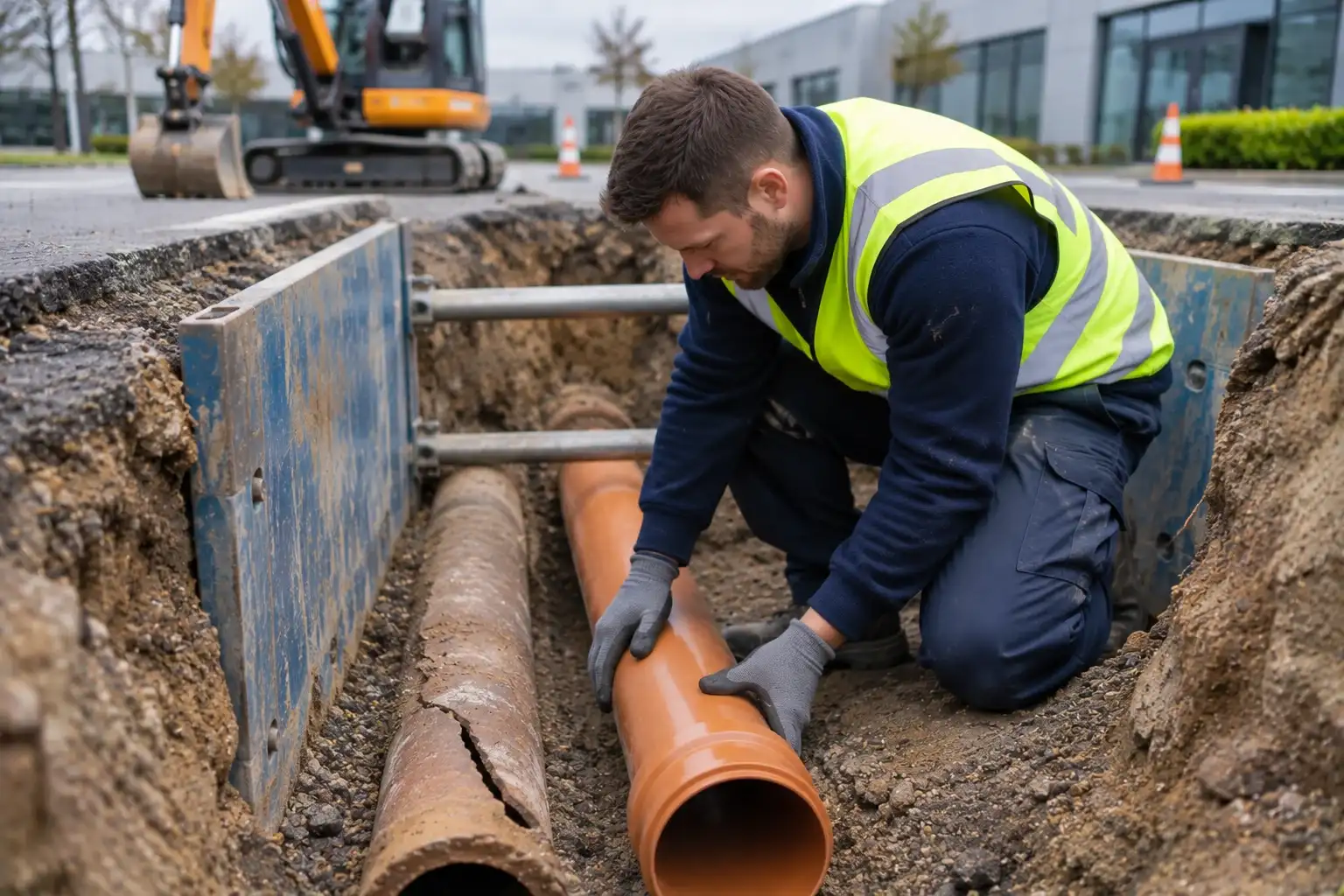
Commercial drain excavation and replacement
Collapsed runs and failing clay or pitch fibre pipework replaced properly, with the excavation planned around your deliveries, staff and tenants.
- Commercial property only, planned around your site
- Footage, photos and a written report where we survey
- Coverage throughout the South East
Request a site survey
Thanks, we've got your enquiry
A member of the BAES team will be in touch shortly. If it's urgent, call 01903 650120.
Excavation and Replacement, explained
BAES Drainage excavates and replaces commercial drains that are beyond repair, including collapsed runs, failed clay pipework and deformed pitch fibre. It is for estates teams, facilities managers and landlords who need a lasting fix where relining will not work. We plan the dig around site operations and cover West Sussex, East Sussex, Surrey, Kent and Hampshire from Worthing.
Some drains cannot be lined. A run that has collapsed, sunk out of fall or deformed so badly that a camera cannot pass usually needs digging out and relaying. On older sites that can mean clay pipes with open or broken joints, or pitch fibre pipe, which was laid until the late 1970s and can delaminate and deform with age.
Excavation on a working site is as much about planning as digging. We agree exclusion zones, pedestrian routes and vehicle access before we start, keep open trenches fenced off, and reinstate tarmac, concrete or paving once the new pipe is tested. You get footage of the finished run and a written report for your records.
The problems it solves
A collapse that shuts part of the site
When a drain collapses, flow can back up into toilets, gullies and kitchens, and the area around it can become unusable. Replacing the failed section restores the run so the building can operate normally, and planning the dig in phases helps keep the rest of the site open.
Replacement work done to the right standard
Approved Document H says repairs and reconstruction of existing drains should be carried out to the same standards as new drains, which covers bedding, backfilling and testing for water tightness. Laying the replacement run to that standard means you are less likely to inherit the next defect along with the repair.
Ground movement and insurance claims
Water escaping from a broken drain can wash out the ground beneath slabs, paving and foundations. Insurers and loss adjusters are likely to ask for evidence of the cause and the fix, so we record the failed pipe and the new installation on camera and in writing.
Sinking paving, smells and standing water
A collapsed drain can show itself as a dip in a car park, smells near an entrance or a gully that never clears. Tenants often notice first. Replacing the run deals with the cause rather than patching the surface above it.
How it works
Survey and diagnosis
We survey the drain to confirm where it has failed, why, and how much needs replacing. If part of the run can be relined instead, we tell you.
Method, programme and quote
You get a written quote with the replacement length, the working area and how long it will be fenced off, so you can brief tenants and staff.
Set up and excavate
We locate buried services, set up barriers and signage, then excavate to the failed pipe with trench support where it is needed.
Lay, test and reinstate
The new pipe is laid on suitable bedding, connected to the existing system, backfilled and tested for water tightness, then the surface is reinstated.
Handover report
We survey the new run and send the footage, photos and a written report so your records show what was replaced, where and when.
Sectors we work in
- Retail and shopping centres
- Hospitality and food service
- Offices and business parks
- Industrial and logistics
- Education
- Healthcare
- Managed residential blocks
- Car parks and forecourts

Free resource
The Drainage Compliance Checklist
A practical checklist for facilities and estates teams: what to inspect, what to record and what insurers and inspectors expect to see.
Excavation and Replacement: your questions
How do you decide between relining and excavation?
It comes down to the condition of the pipe. Relining generally needs a run that still broadly holds its shape and line. If the pipe has collapsed, lost its fall, is badly deformed or has displaced too far for a liner to follow, it usually needs replacing. Sometimes the answer is both, with a short dig at the worst point and lining either side. The CCTV footage shows which applies, and we walk you through it before quoting.
Why do older clay and pitch fibre drains fail?
Clay pipes are rigid, but their joints can open, crack or let roots in, and individual pipes can break under heavy loads or ground movement. Pitch fibre, made from wood fibre impregnated with coal tar and laid until the late 1970s, can delaminate and deform underground, and may eventually collapse. Either can be found on older sites, and a survey will show whether yours are affected.
Can you keep the site open while you dig?
Usually, yes. We plan the excavation around how your site works, fencing off only the area we need and keeping safe routes for staff, visitors and vehicles. Where a dig crosses a main entrance, loading bay or busy part of a car park, we can phase the work or schedule it for quieter times. Open trenches stay fenced off when we are not working on them.
Is the new drain tested before the surface goes back?
Yes. Approved Document H says gravity drains should be tested for water tightness with either an air test or a water test after laying, haunching and backfilling, and that repairs and reconstruction should meet the same standards as new drains. We test the replacement run and survey it on camera before the surface is reinstated, so any problem is found while it is still easier to put right.
What happens to the surface once the drain is replaced?
We reinstate whatever was there before, whether that is tarmac, concrete, block paving, kerbs or soft landscaping. On a car park or service yard the reinstated area needs to carry the same loads as the surrounding surface, so it is compacted in layers. If there is a particular finish or line marking you need matched, tell us when we quote.
Who pays if the failed pipe is a public sewer?
If the collapsed section turns out to be a public sewer or a lateral drain that the sewerage company owns, it is normally the company's responsibility rather than yours. On 1 October 2011 many private sewers and lateral drains connected to the public network transferred to the sewerage companies. On a commercial site with several units or buildings, though, the pipes serving them usually stay private until they leave the site. Our survey shows where the failure is, so you can confirm ownership with the sewerage company before work is ordered.
Related guides
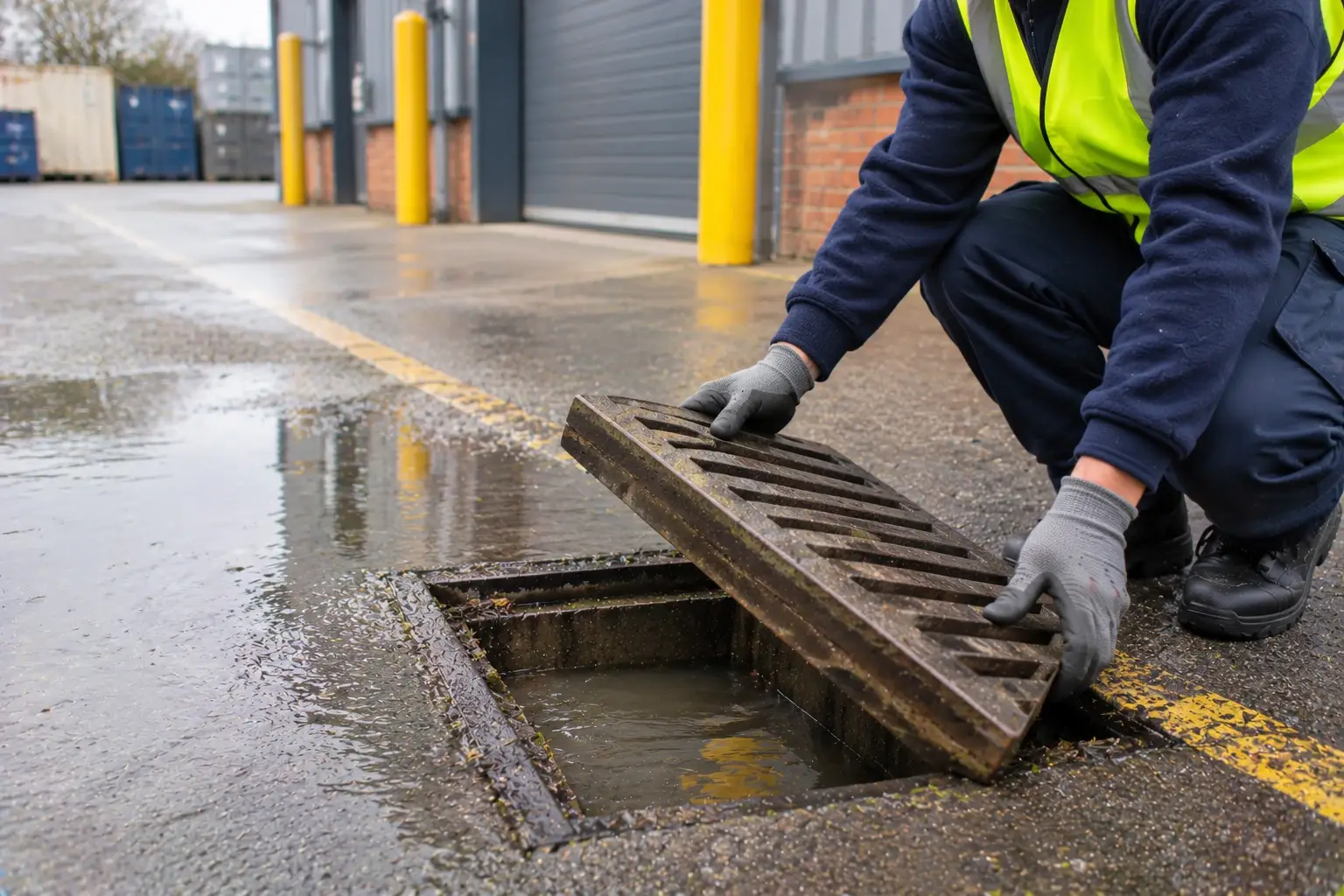
Signs a commercial drain is failing (and what ignoring them costs)
The warning signs of a failing commercial drain, what each usually means, when to call for a CCTV survey or emergency help, and the costs of waiting.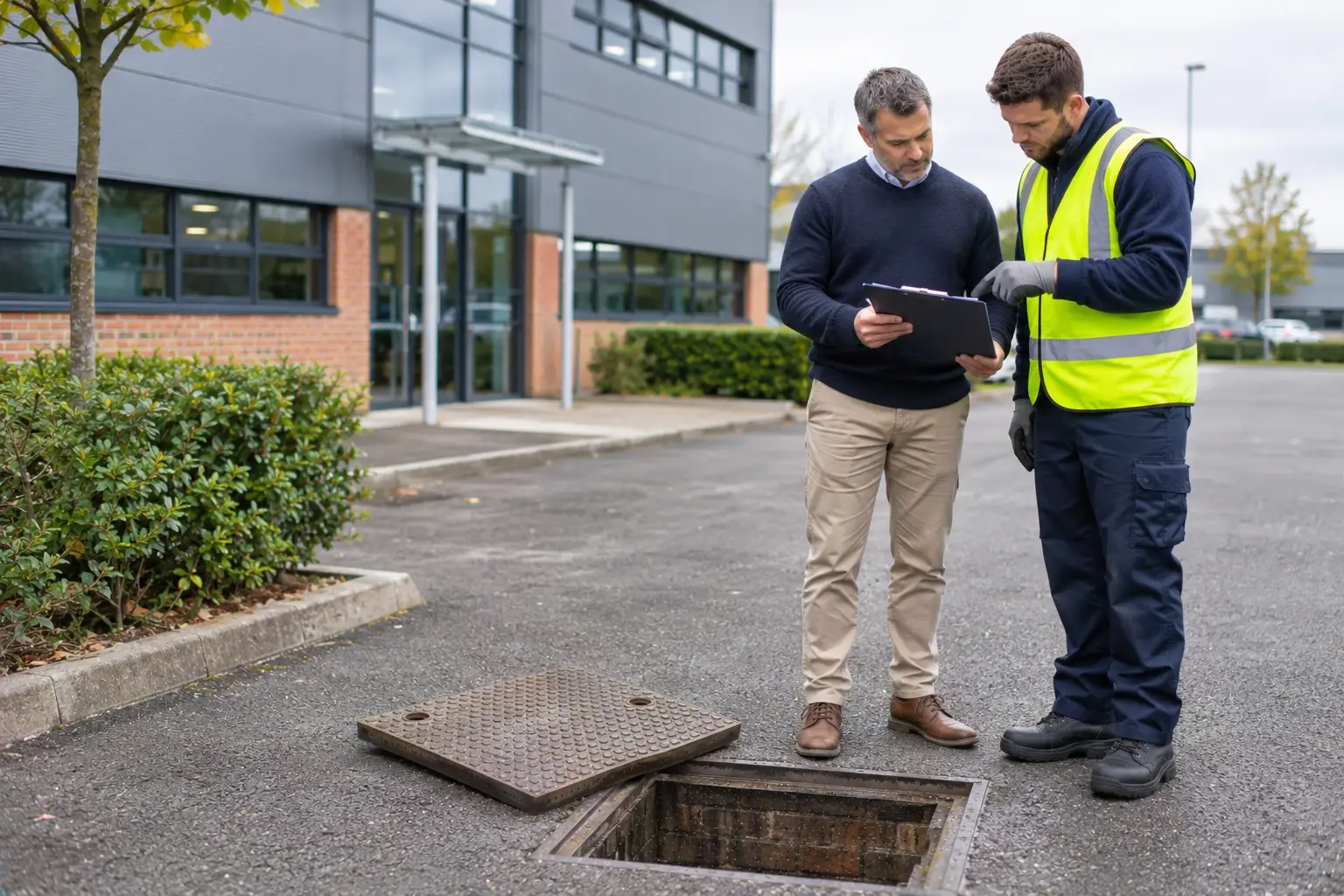
Commercial drainage costs in the UK (2026 price guide)
Commercial drainage costs in 2026: call-outs, jetting, CCTV surveys, relining, excavation, grease traps, interceptors and PPM contracts. Mostly ex VAT.
Areas we cover
From our base in Worthing we look after commercial sites across West Sussex, East Sussex, Surrey, Kent and Hampshire. Pick your town to see local drainage information.
Hampshire
Not sure if you're covered?
Give us the site postcode and we'll tell you straight away.
Drainage problem? Call now.
Flooding, backing up or a blocked kitchen line? Speak to the team about the next step.
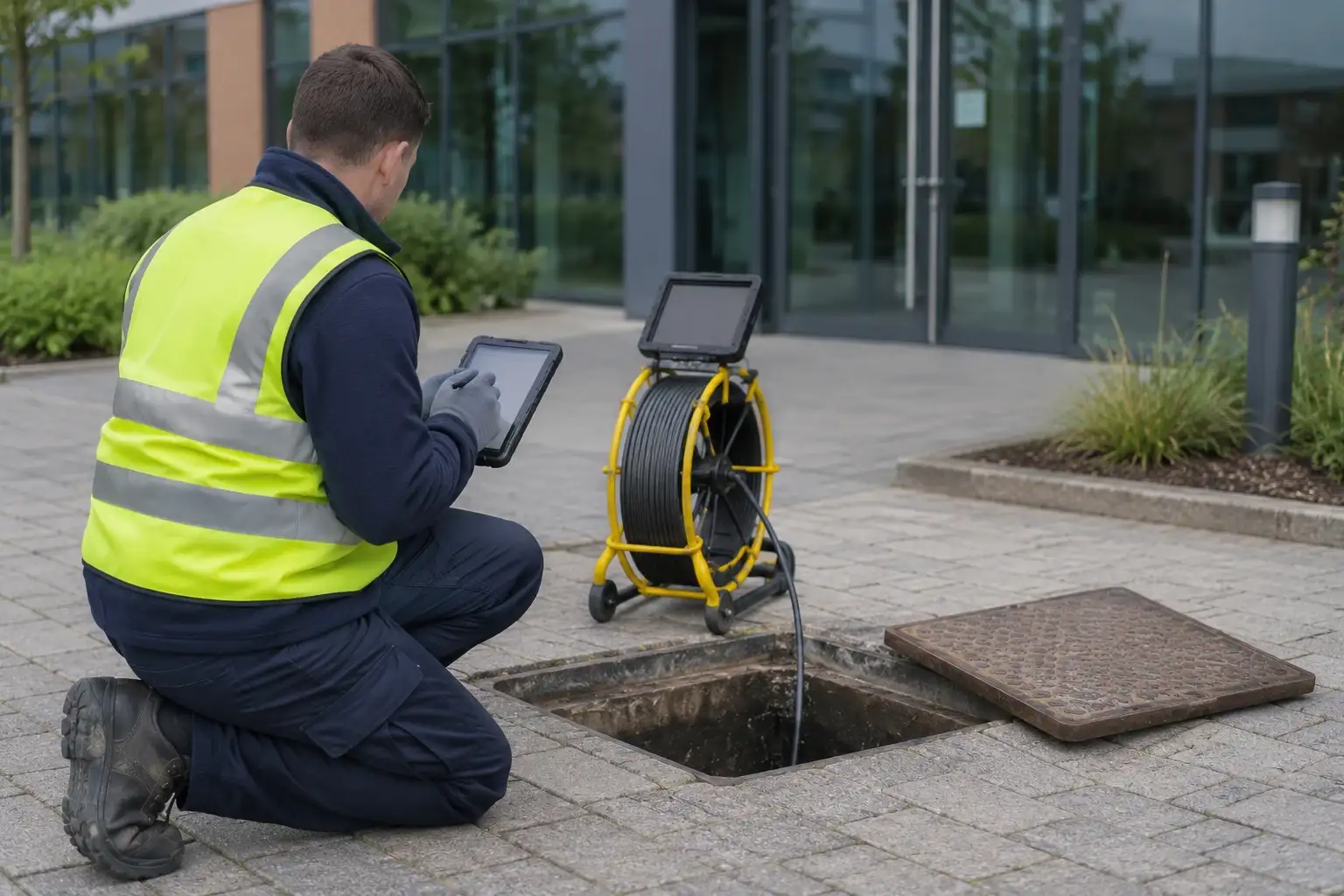
Talk to us about excavation and replacement. Get in touch now.
Tell us about the site and the problem. We will come back to you to talk it through, arrange a survey or get an engineer booked in.
- Commercial specialistsWe only work on commercial property, so we plan around trading hours, tenants and access.
- Clear reportingFindings, photos and recommendations in plain English, ready to share with your team or insurer.
- One BAES teamPart of BAES Building and Estate Services, so facilities, security and vacant property work can sit with the same team.