
Commercial drainage services
Commercial drain repairs and no-dig relining
Cracked, leaking and root-damaged pipes repaired from the inside, so car parks, kitchens and shop floors stay in use while the work is done.
- Commercial property only, planned around your site
- Footage, photos and a written report where we survey
- Coverage throughout the South East
Request a site survey
Thanks, we've got your enquiry
A member of the BAES team will be in touch shortly. If it's urgent, call 01903 650120.
Repairs and Relining, explained
BAES Drainage repairs damaged commercial drains with patch repairs and no-dig relining, fixing pipes from the inside through existing manholes. It is for facilities managers, landlords and managing agents who need cracked, leaking or root-damaged runs put right without breaking out car parks, warehouse floors or kitchens. We work from Worthing across West Sussex, East Sussex, Surrey, Kent and Hampshire.
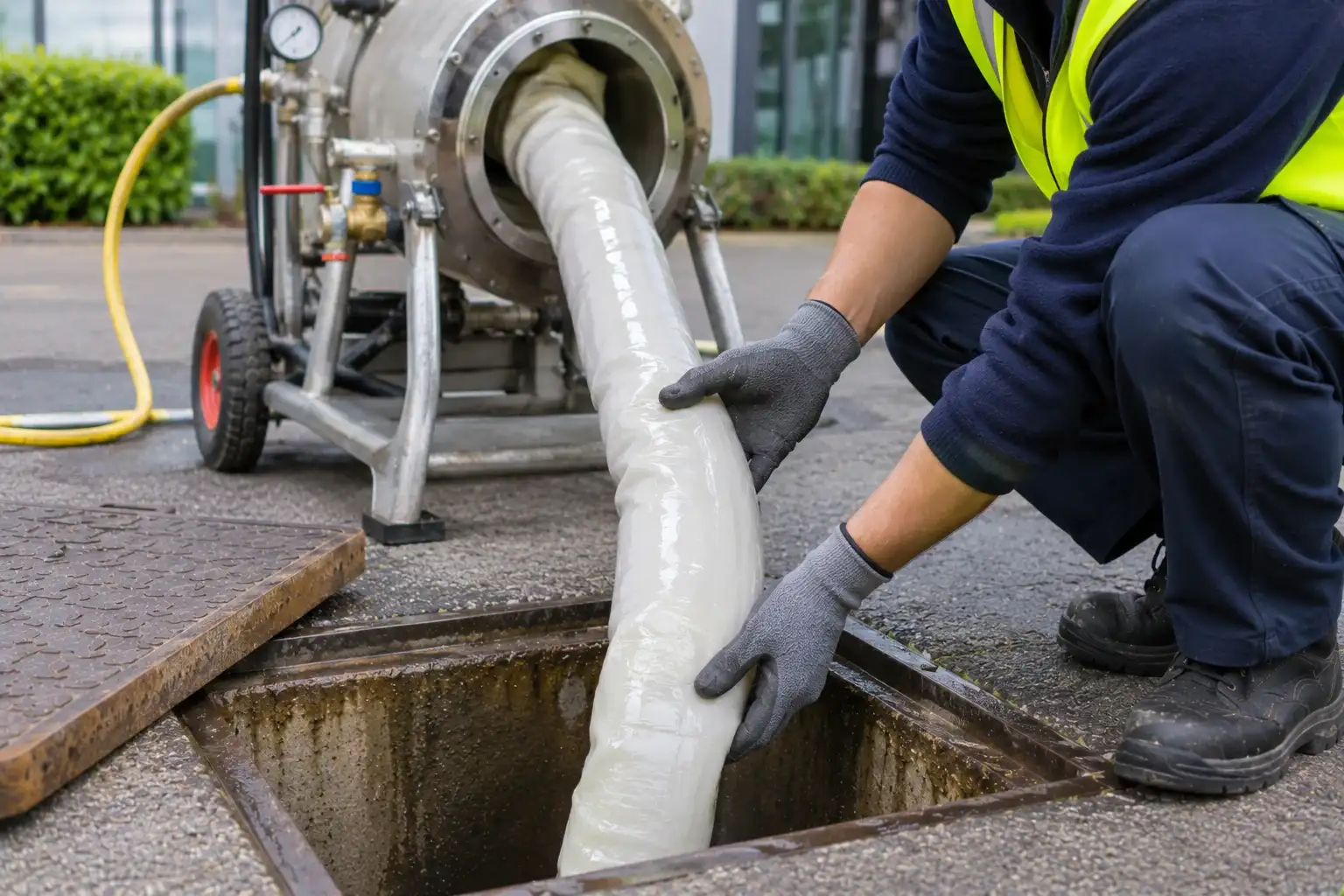
Many drain defects on a commercial site are local. A cracked joint, a patch of root ingress, a pipe that has shifted where lorries turn. Digging down to them can mean closing parking bays, lifting floor slabs or shutting a kitchen. Where the pipe is suitable, relining avoids most of that. A resin-soaked liner is inserted into the damaged pipe, pressed against the wall and cured, leaving a new pipe inside the old one.
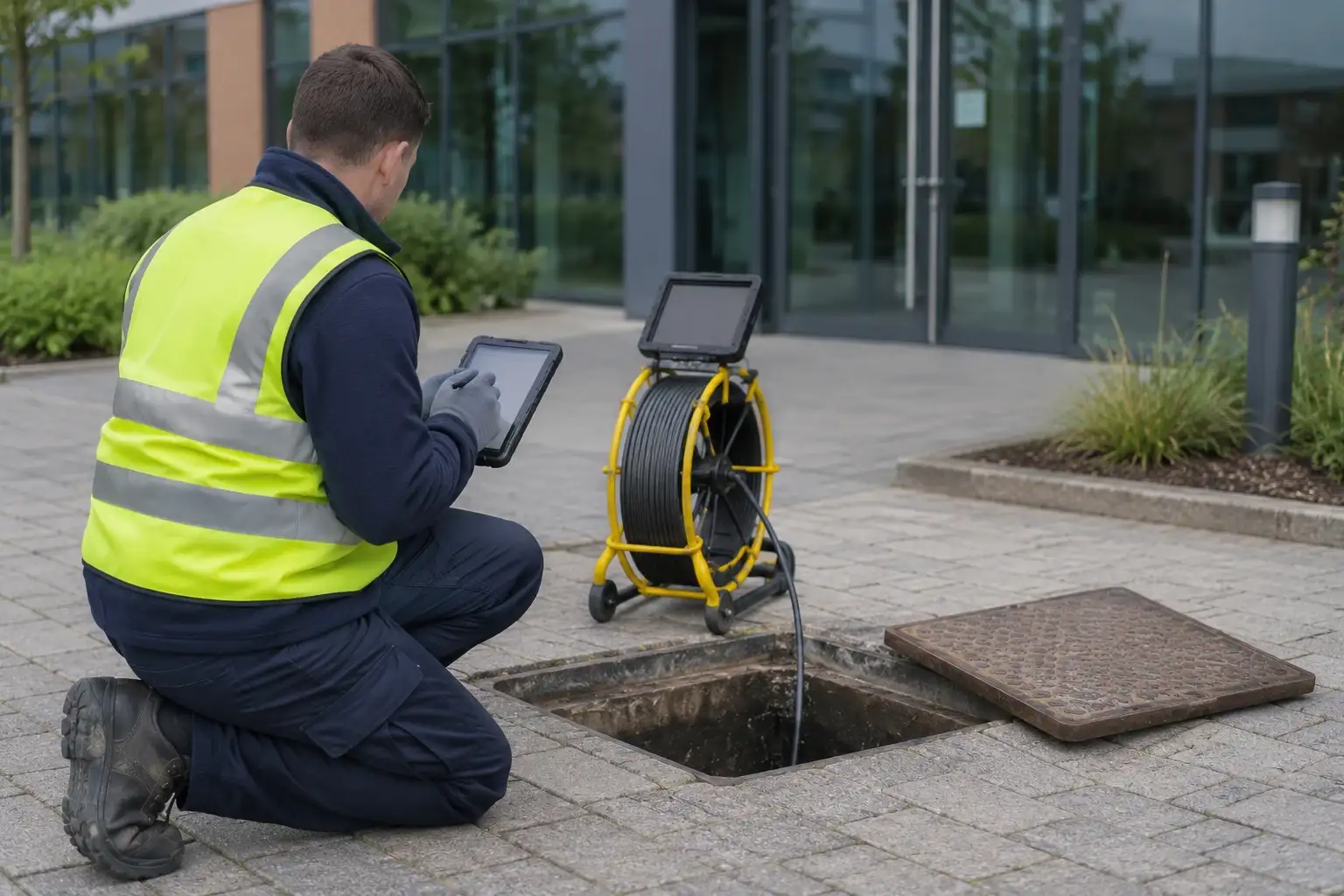
Every repair starts from survey footage, so you can see what is being fixed and why. When the work is finished we survey the run again and send you the footage, photos and a written report for your files, your insurer or the next tenant.
The problems it solves
Repairs that keep the site trading
Excavating a defect in a service yard or under a shop floor can mean closing that area while it is dug out, repaired and reinstated. Relining is done from manholes and inspection chambers, so disruption is mostly limited to those access points and the rest of the site carries on working.
Repairing obligations under the lease
Drain repair often falls within the repairing obligations in a commercial lease, on the landlord or the tenant depending on the wording. A documented repair with before and after footage gives you a record of the work to refer to at lease end, on a sale or in a dilapidations discussion.
Evidence for insurers and loss adjusters
When a leaking drain is linked to subsidence or water damage, an insurer or loss adjuster may ask to see the defect and how it was put right. Our footage and written report record both, which you can supply if a claim is being reviewed.
The same blockage, every few weeks
Displaced joints and roots catch paper, wipes and fat, so the same toilet block or kitchen backs up again soon after it is cleared. Repairing the defect itself removes that cause of the repeat call-outs and the tenant complaints that come with them.
How it works
Tell us what is happening
Call or email with the symptoms and send any survey you already have. If we have not seen the drain, we start with a CCTV survey to pinpoint the defect and measure the pipe.
Repair options and a written quote
We explain whether a patch, a full liner or excavation is the right fix, using the footage to show why, and send a written quote.
Plan the work around the site
We agree working hours, access points and any areas to cone off, so deliveries, parking and opening hours are disrupted as little as possible.
Clean, prepare and line
The pipe is jetted and any roots or intrusions are cut back. The patch or liner is installed and cured, then side connections are reopened.
Final survey and report
We survey the repaired run and send the footage, photos and a written report, so you have a clear record of what was done and where.
Sectors we work in
- Retail and shopping centres
- Hospitality and food service
- Offices and business parks
- Industrial and logistics
- Education
- Healthcare
- Managed residential blocks
- Car parks and forecourts

Free resource
The Drainage Compliance Checklist
A practical checklist for facilities and estates teams: what to inspect, what to record and what insurers and inspectors expect to see.
Repairs and Relining: your questions
What is no-dig drain relining?
Relining puts a new pipe inside the old one without excavation. A flexible liner soaked in resin is fed into the damaged pipe from a manhole, pressed against the pipe wall and cured. Once hard, it covers cracks and minor joint defects and helps stop leaks and roots getting back in. It suits commercial sites because the work happens through existing access points rather than through the car park, yard or floor slab above the pipe.
When is relining not the right repair?
A liner needs a pipe that still broadly holds its shape and line. Where a run has collapsed, is badly deformed, has a dip or back fall in its gradient, or has joints displaced so far that a liner cannot follow it, excavation and replacement is usually the better option. A liner follows the existing pipe, so it cannot correct its line or fall. Older pitch fibre pipes that have deformed may need re-rounding before lining, or may be better replaced. The survey footage shows which applies, and we explain the reasoning before you commit to anything.
What is the difference between a patch repair and a full liner?
A patch repair is a short length of liner placed over a single defect, such as a crack, hole or failed joint, in a pipe that is otherwise sound. A full liner runs the whole length between two manholes. Patches suit isolated damage. Where defects are spread along a run, lining the full length is often more practical and gives you one continuous repair instead of a string of separate ones.
Who is responsible for repairing a damaged drain on our site?
It depends where the defect is. Since 1 October 2011, most private sewers and lateral drains in England and Wales that were connected to the public sewer on 1 July 2011 have been the sewerage company's responsibility. On many commercial sites, though, pipes serving several buildings within a single curtilage are drains and stay private until they leave the site. Our survey records where the defect sits, which helps you establish whether it is yours, a neighbour's or the water company's to fix.
Can you reline drains in a working kitchen or warehouse?
Often, yes. Because the work is done from manholes and inspection chambers, the areas above the pipe can usually stay in use. The run being lined is taken out of service while the liner is installed and cures, with flow held back or pumped around it, so we agree timings with you in advance, which may mean working outside trading hours or during a quiet shift. Where a chamber sits inside a kitchen or production area, we plan hygiene and access with your team beforehand.
Will we get a record of the repair?
Yes. We survey the run before and after the work and send you the footage, photos and a written report showing the defect and the finished repair. That is the kind of evidence an insurer, a buyer's surveyor or an incoming tenant may ask for, and it gives your asset register an accurate note of the pipe's condition and when it was last worked on.
Related guides
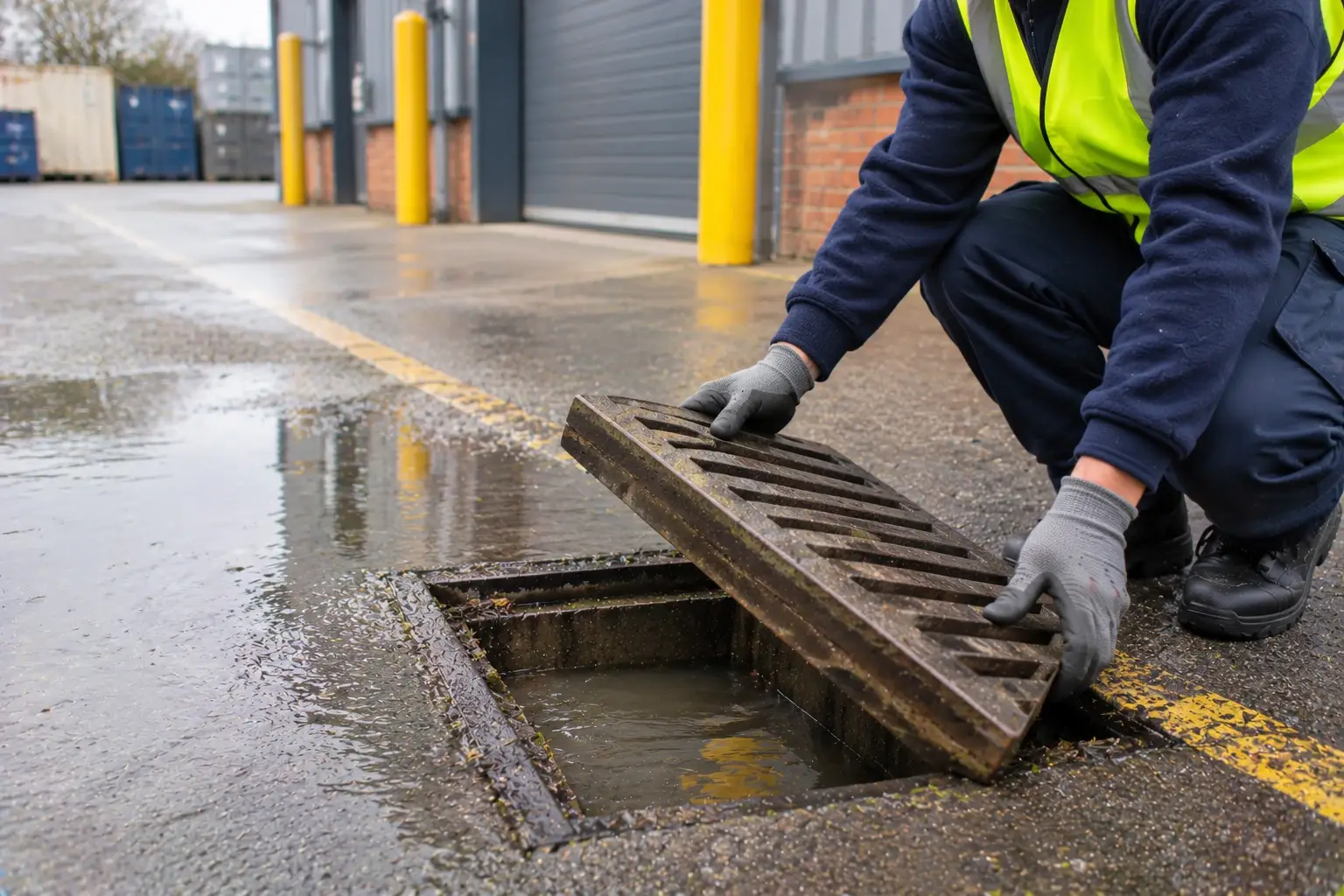
Signs a commercial drain is failing (and what ignoring them costs)
The warning signs of a failing commercial drain, what each usually means, when to call for a CCTV survey or emergency help, and the costs of waiting.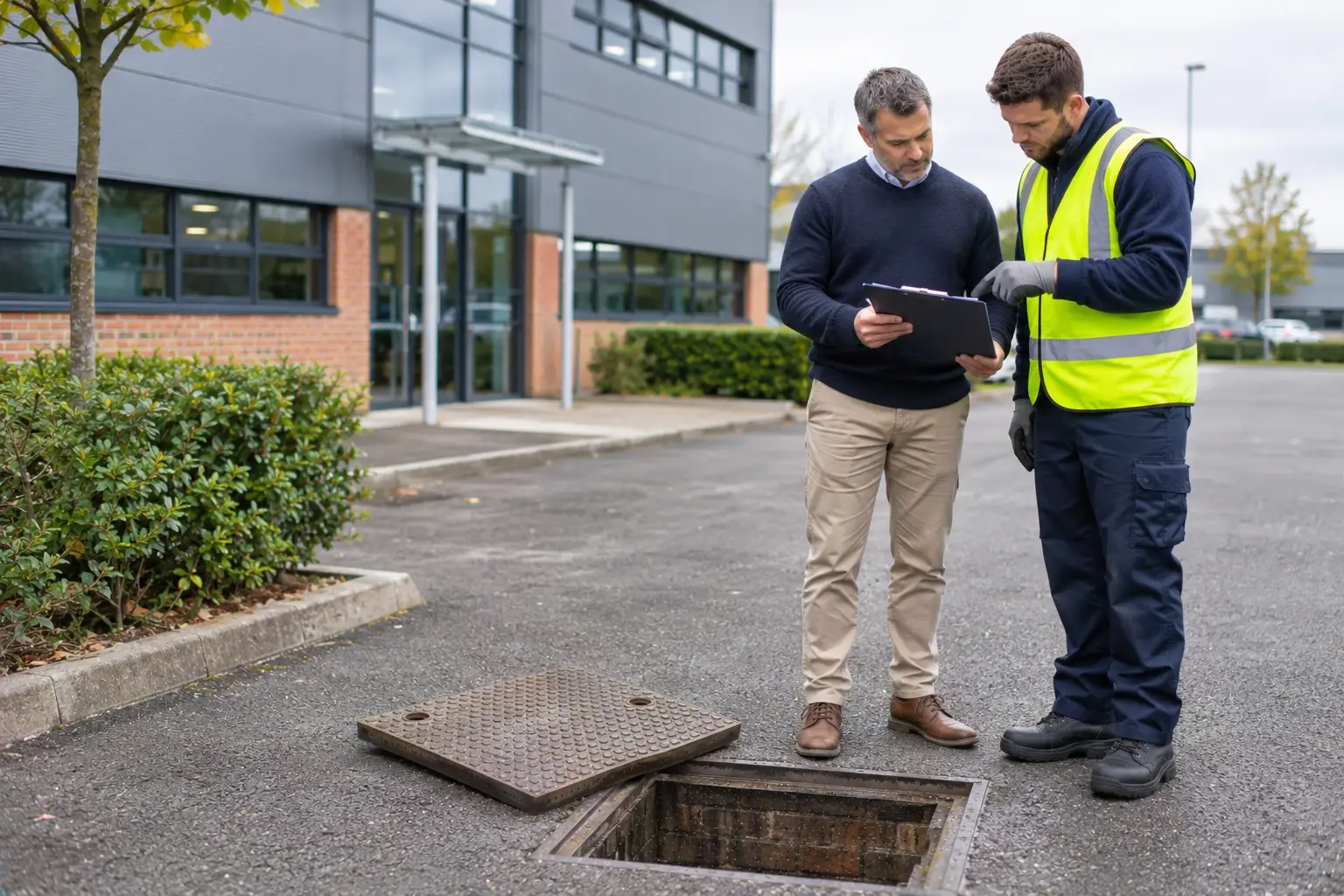
Commercial drainage costs in the UK (2026 price guide)
Commercial drainage costs in 2026: call-outs, jetting, CCTV surveys, relining, excavation, grease traps, interceptors and PPM contracts. Mostly ex VAT.
Areas we cover
From our base in Worthing we look after commercial sites across West Sussex, East Sussex, Surrey, Kent and Hampshire. Pick your town to see local drainage information.
Hampshire
Not sure if you're covered?
Give us the site postcode and we'll tell you straight away.
Drainage problem? Call now.
Flooding, backing up or a blocked kitchen line? Speak to the team about the next step.
Talk to us about repairs and no-dig relining. Get in touch now.
Tell us about the site and the problem. We will come back to you to talk it through, arrange a survey or get an engineer booked in.
- Commercial specialistsWe only work on commercial property, so we plan around trading hours, tenants and access.
- Clear reportingFindings, photos and recommendations in plain English, ready to share with your team or insurer.
- One BAES teamPart of BAES Building and Estate Services, so facilities, security and vacant property work can sit with the same team.