
Commercial drainage services
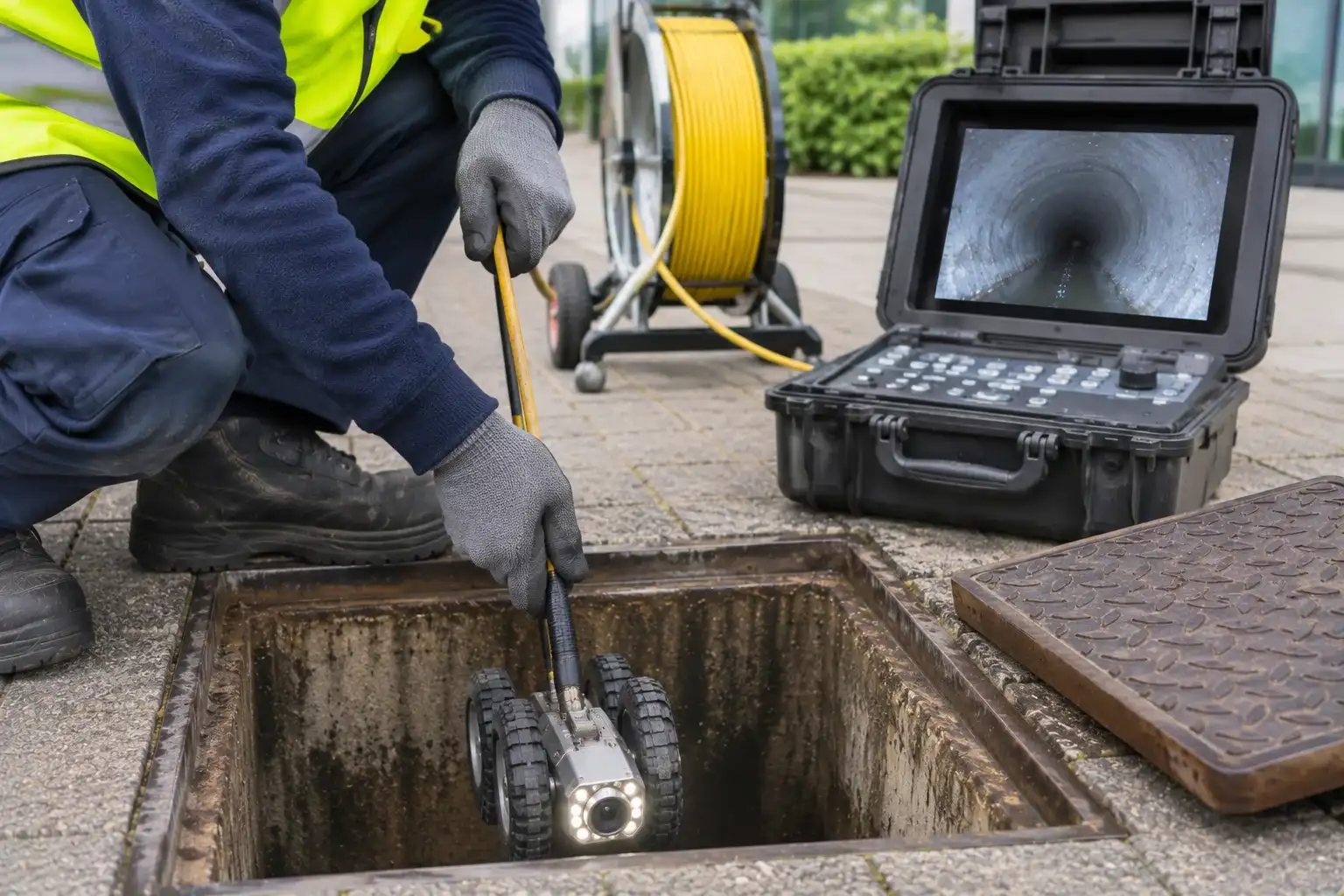
Commercial CCTV drain surveys
Camera surveys that show the condition of drains below ground, with footage, photos and a written report you can share with an insurer, buyer or board.
- Commercial property only, planned around your site
- Footage, photos and a written report where we survey
- Coverage throughout the South East
Request a site survey
Thanks, we've got your enquiry
A member of the BAES team will be in touch shortly. If it's urgent, call 01903 650120.
CCTV Drain Surveys, explained
A CCTV drain survey sends a camera through a site's drainage to record the condition of the pipes, joints and chambers inspected. BAES Drainage carries out surveys for commercial owners, facilities teams, agents and buyers across West Sussex, East Sussex, Surrey, Kent and Hampshire from Worthing, with footage, photos and a written report on what was found.
Below-ground drainage is one of the few building systems nobody can see. A survey replaces guesswork with evidence: where the runs go, what they are made of, and whether they are cracked, displaced, root-damaged or partly collapsed.
Each defect is graded by severity and located on a plan, so you can tell the difference between something to keep an eye on and something that needs repair before it fails. The report is written to be read by people who are not drainage engineers.
Surveys are commissioned for many reasons: before buying or leasing a building, at lease end when dilapidations are being assessed, after an insurance claim, to diagnose a recurring blockage, or to plan capital spending across an estate.
The problems it solves
Recurring blockages and downtime
When the same drain blocks again and again, jetting alone may only clear the symptom. A survey can find the cause, whether that is a displaced joint, a sag holding water or root ingress, so it can be repaired rather than cleared repeatedly.
Lease, acquisition and dilapidations
Drains are an easy liability to inherit. A survey before acquisition or at the start of a lease records their condition on that date, giving buyers, tenants and landlords a dated record to refer back to, including when dilapidations are assessed at lease end.
Evidence for insurers
After subsidence, flooding or an escape of water, insurers and loss adjusters may want to know whether the drains played a part. Graded footage of the affected runs gives everyone the same evidence to work from and can help show whether the drains were involved.
Tenant complaints about smells and slow drains
Persistent smells, slow drainage and damp near walls can all be caused by a drainage defect that is not visible from the surface. A survey helps locate it so the managing agent can respond with a clear diagnosis and a plan.
How it works
Brief and scope
You tell us why the survey is needed and which areas matter, whether that is the whole site, one problem run or the drains serving a particular unit.
Access and preparation
We locate and lift chambers and, where pipes are fouled, jet them first so the camera gets a clear view.
Camera survey and tracing
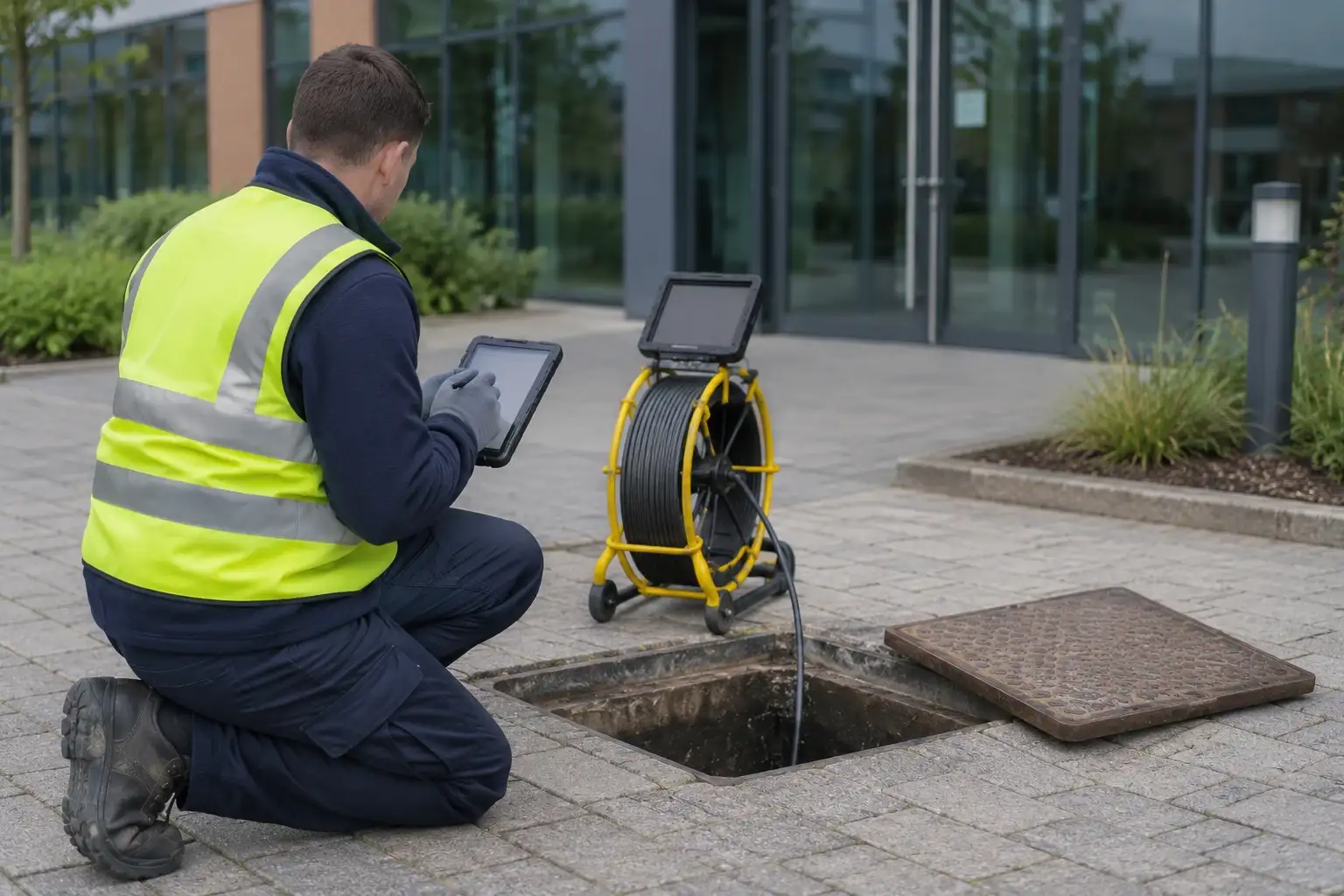
Our engineers run the camera through each line, recording footage and tracing the route so it can be drawn on a plan.
Grading and reporting
Defects are graded by severity and located on the plan, and we write up the findings with photos and recommendations.
Recommendations and quotes
If repairs are needed, we explain the options, such as relining, patch repair or excavation, and quote so you can decide or budget.
Sectors we work in
- Retail and shopping centres
- Hospitality and food service
- Offices and business parks
- Industrial and logistics
- Education
- Healthcare
- Managed residential blocks
- Car parks and forecourts
Free resource
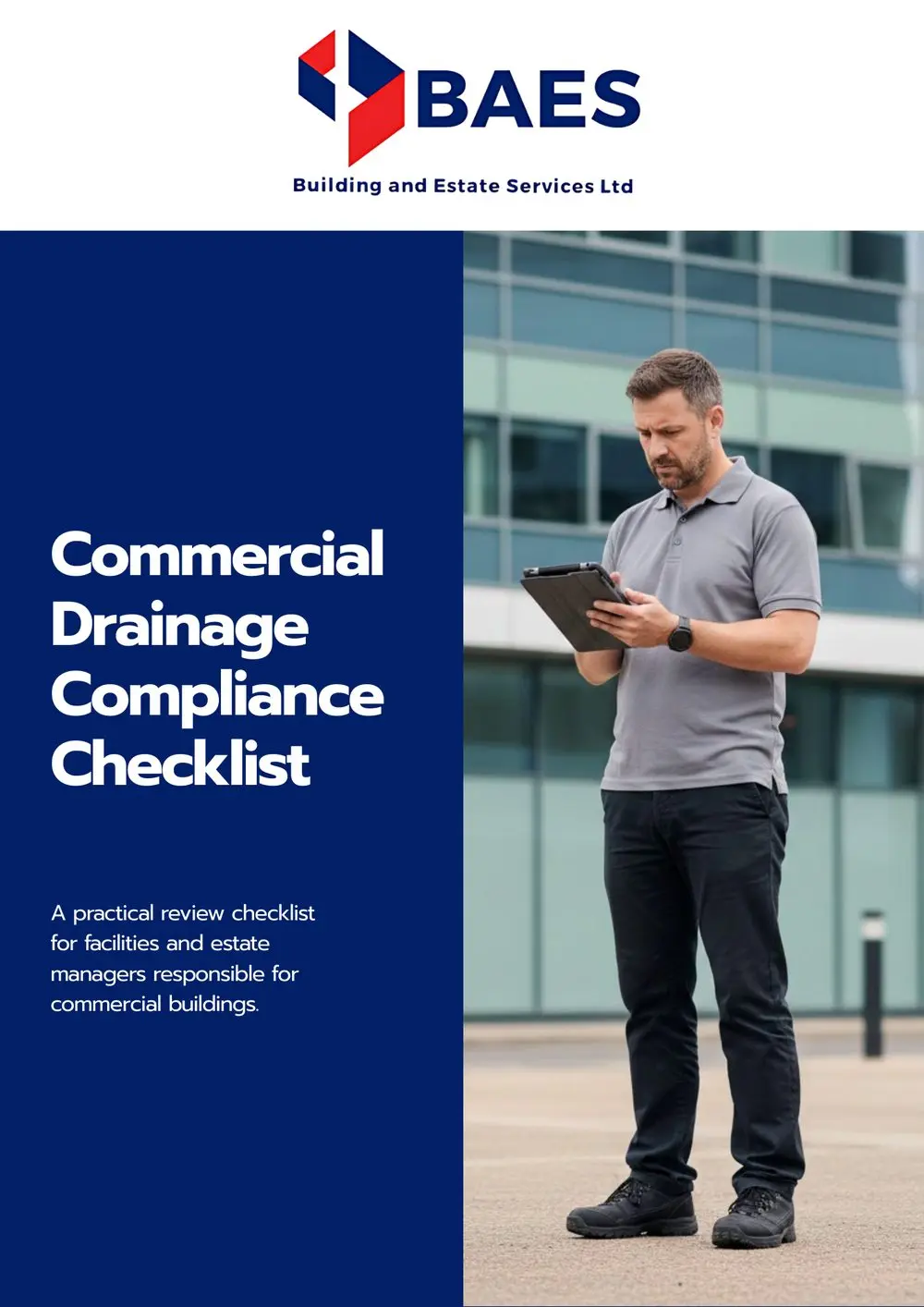
The Drainage Compliance Checklist
A practical checklist for facilities and estates teams: what to inspect, what to record and what insurers and inspectors expect to see.
CCTV Drain Surveys: your questions
What does a commercial CCTV drain survey report include?
The report includes recorded footage of the inspected runs, still photos of each defect, a plan showing the drainage layout and where each defect sits, and a written summary with defects graded by severity. Recommendations explain what needs attention now, what should be monitored and what is in acceptable condition, written in plain English for property managers, insurers and buyers.
Should we survey the drains before buying or leasing a commercial building?
It is often worthwhile, particularly for older buildings, food premises and sites with large yards or car parks. Drains within the boundary that serve only that property are usually the owner's responsibility, and a lease may pass repair obligations to the tenant. A survey before you commit records the condition at that point, can inform negotiations, and reduces the risk of inheriting a repair bill you did not know about.
Will an insurer accept your survey report?
Our reports include footage, photos and a written description of each defect, which is the kind of evidence a loss adjuster may ask to see. Each insurer has its own requirements, so if the survey is for a claim it is worth checking with them or the loss adjuster first. We can scope the survey around what they have asked to see.
Can you map drains where we have no drawings?
Yes. Some commercial sites have no reliable drainage drawings, especially where buildings have been extended or changed use. We trace each run with the camera and locating equipment, and produce a plan showing chambers, pipe routes and connections. That plan remains useful after the survey, for maintenance and for planning future works.
Who is responsible if the defect is in the public sewer?
In England and Wales, most private sewers and lateral drains that connected to the public sewer by 1 July 2011 transferred to the water companies on 1 October 2011. Drains within the boundary serving only that property remain the owner's, and sewers within a single-landlord site with several businesses are likely to stay private. A survey shows where the problem is, giving you evidence to raise with the water company if it sits on their part.
Do the drains need cleaning before a survey?
Often, yes. Fat, scale, silt and debris can hide cracks, displaced joints and root ingress from the camera, which makes the report less reliable. Where pipes are dirty we jet them first so the survey shows the condition of the pipe rather than the build-up inside it. We will tell you on site if cleaning is needed and why.
Related guides
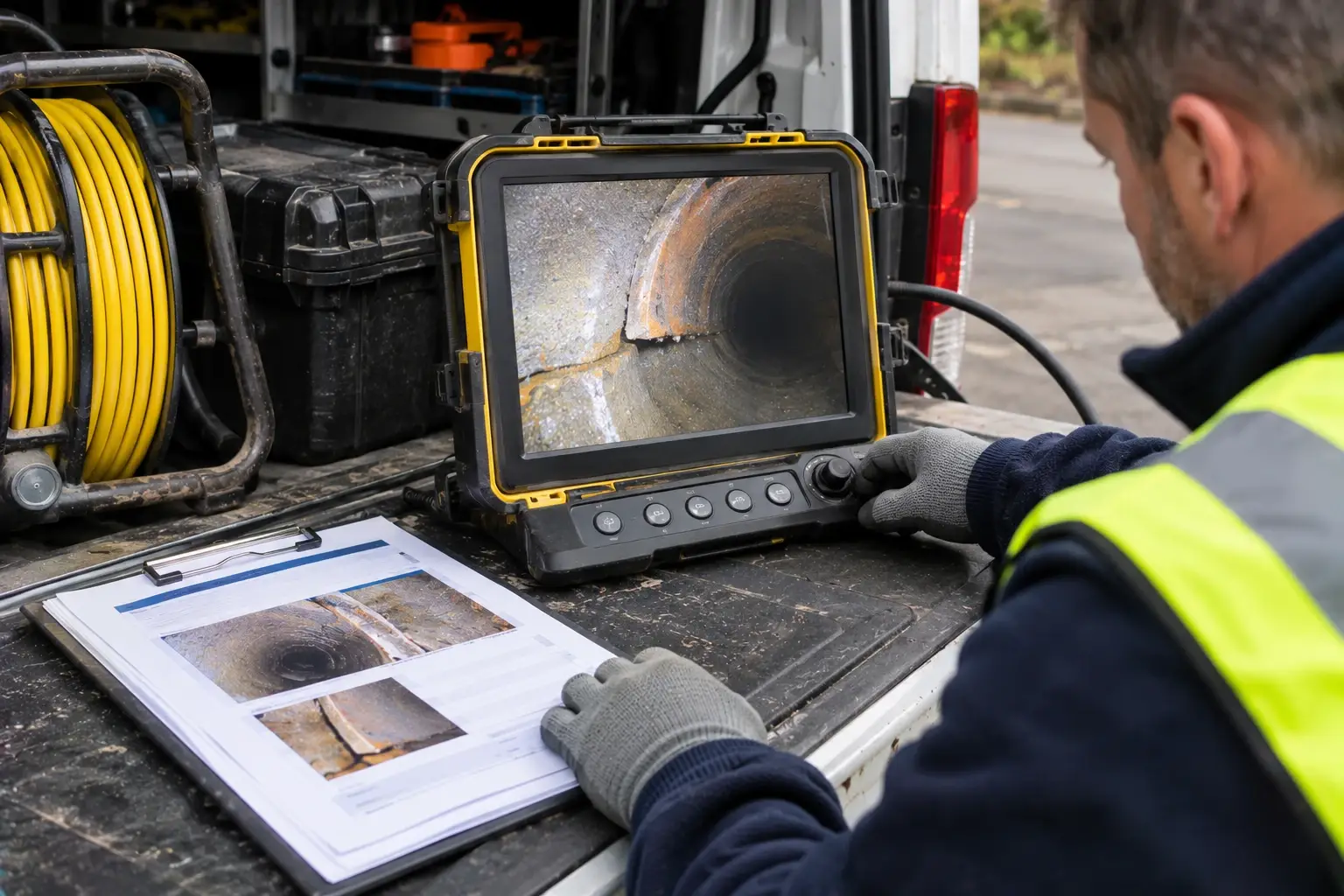
What a CCTV drain survey report should include (and how to read it)
What a commercial CCTV drain survey report should contain, how MSCC5 coding and grades 1–5 work, and the red flags that mark a report you can't rely on.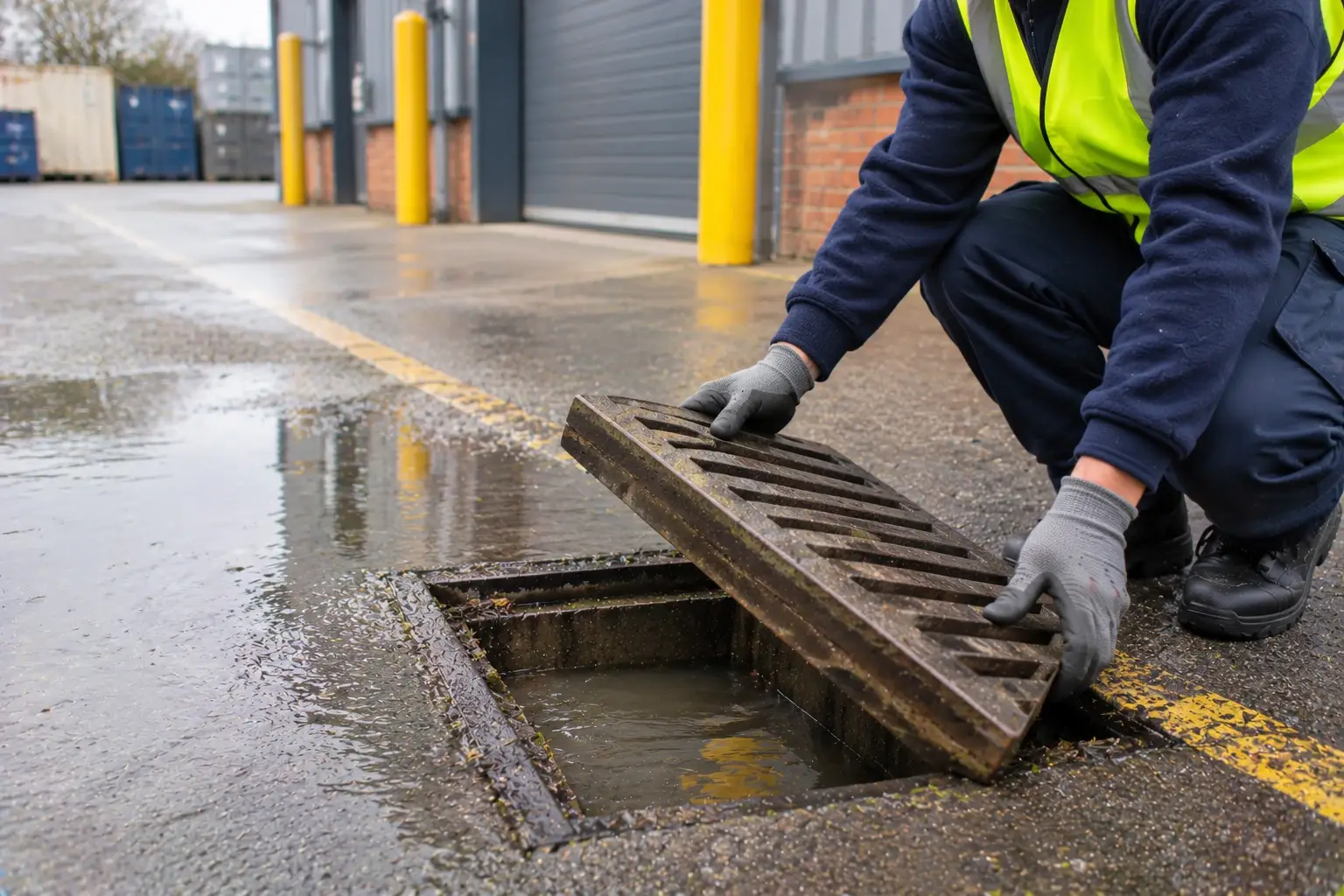
Signs a commercial drain is failing (and what ignoring them costs)
The warning signs of a failing commercial drain, what each usually means, when to call for a CCTV survey or emergency help, and the costs of waiting.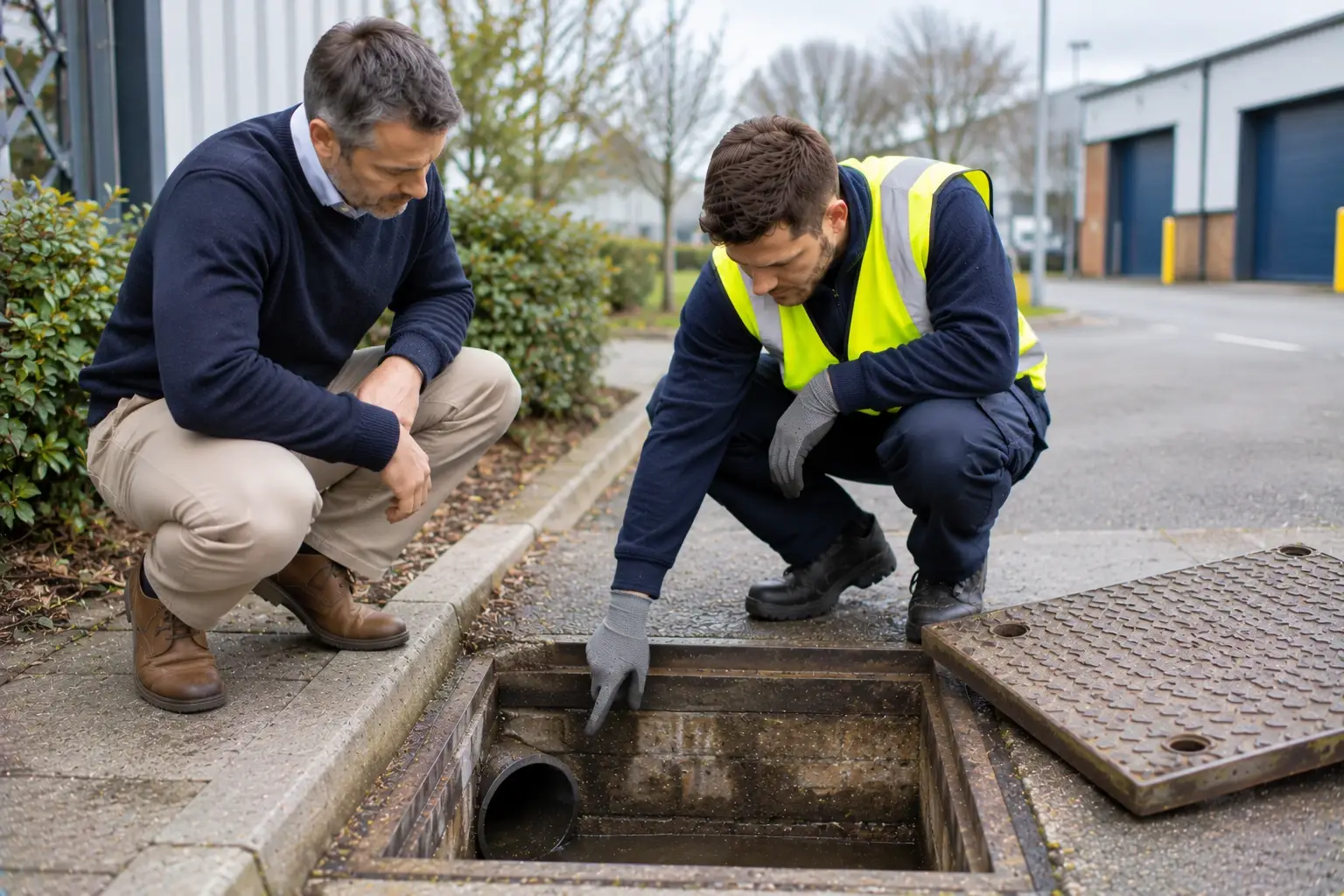
Who is responsible for drains on a commercial or multi-let site?
Who is responsible for drains on a commercial or multi-let site? Drains, lateral drains and sewers, the 2011 transfer, leases and service charges.
Areas we cover
From our base in Worthing we look after commercial sites across West Sussex, East Sussex, Surrey, Kent and Hampshire. Pick your town to see local drainage information.
Hampshire
Not sure if you're covered?
Give us the site postcode and we'll tell you straight away.
Drainage problem? Call now.
Flooding, backing up or a blocked kitchen line? Speak to the team about the next step.
Talk to us about CCTV drain surveys. Get in touch now.
Tell us about the site and the problem. We will come back to you to talk it through, arrange a survey or get an engineer booked in.
- Commercial specialistsWe only work on commercial property, so we plan around trading hours, tenants and access.
- Clear reportingFindings, photos and recommendations in plain English, ready to share with your team or insurer.
- One BAES teamPart of BAES Building and Estate Services, so facilities, security and vacant property work can sit with the same team.