
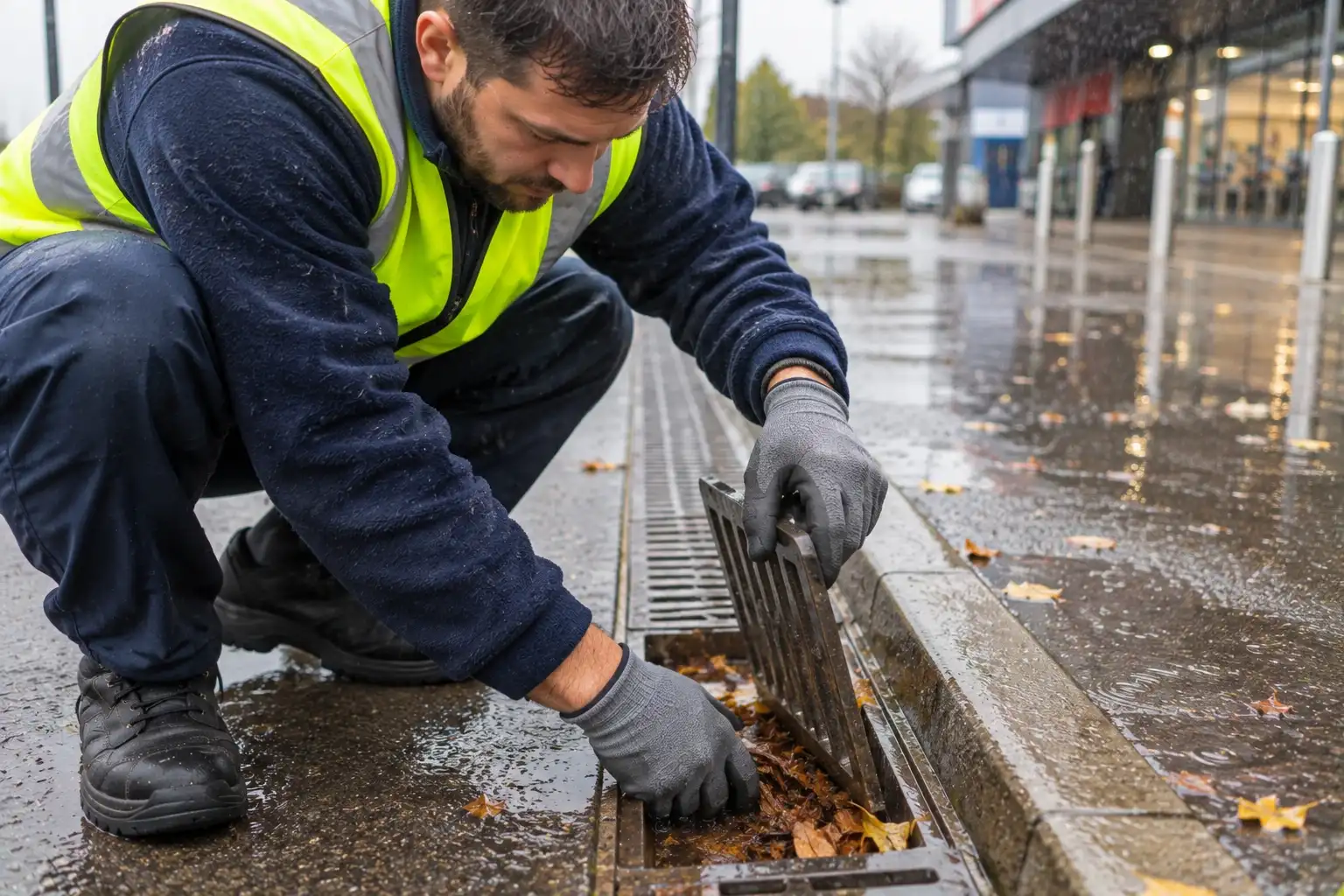
Commercial drainage services
Commercial soakaways and surface water drainage
Car parks, service yards and business parks that drain properly in heavy rain, instead of flooding entrances and loading bays.
- Commercial property only, planned around your site
- Footage, photos and a written report where we survey
- Coverage throughout the South East
Request a site survey
Thanks, we've got your enquiry
A member of the BAES team will be in touch shortly. If it's urgent, call 01903 650120.
Soakaways and Surface Water, explained
BAES Drainage investigates, maintains and repairs soakaways and surface water drainage on commercial sites, including car parks, service yards, industrial units and business parks. It is for facilities managers, estates teams and landlords dealing with ponding, flooding or slow-draining ground. We work across West Sussex, East Sussex, Surrey, Kent and Hampshire from our base in Worthing.
Surface water systems on commercial sites do a lot of quiet work. Gullies, channel drains, catchpits, soakaways and underground storage tanks take rain off roofs and hard standing and get rid of it, either into the ground, a watercourse or a sewer. When one part silts up or breaks, the water stays on the surface.
Many problems build slowly. Silt and leaves fill gullies and catchpits, soakaways can clog and drain more slowly over time, and flow controls can block. We find where the system is failing, clear what can be cleared, repair or replace what cannot, and send you footage, photos and a written report.
The problems it solves
Flooded entrances and loading bays
When a car park or yard floods, deliveries stop, staff cannot park and customers walk through water to reach the door. Finding and fixing the blocked gully, silted soakaway or collapsed pipe gets the site back to normal after heavy rain.
Keeping polluted water out of the ground
GOV.UK pollution prevention guidance for businesses says only clean water should drain into a surface water drain or soakaway, because surface water drains discharge directly to the environment. Oil from car parks, wash-down water and foul misconnections can all end up there. We trace where water is coming from and flag anything that should not be in the system.
Flood damage and insurance
Water standing against buildings or getting into a ground floor unit can lead to claims, and an insurer may ask whether the drainage was maintained and what failed. Our report records the condition of the system and the work done to put it right.
Ice, puddles and slips
Ponding across walkways and parking bays is a nuisance for tenants and visitors, and in winter it can freeze. Keeping gullies and channels clear and soakaways working removes the standing water at the source.
How it works
Tell us where the water sits
Send photos of the flooding, where it collects and how long it takes to go down, plus any drainage drawings you have.
Site investigation
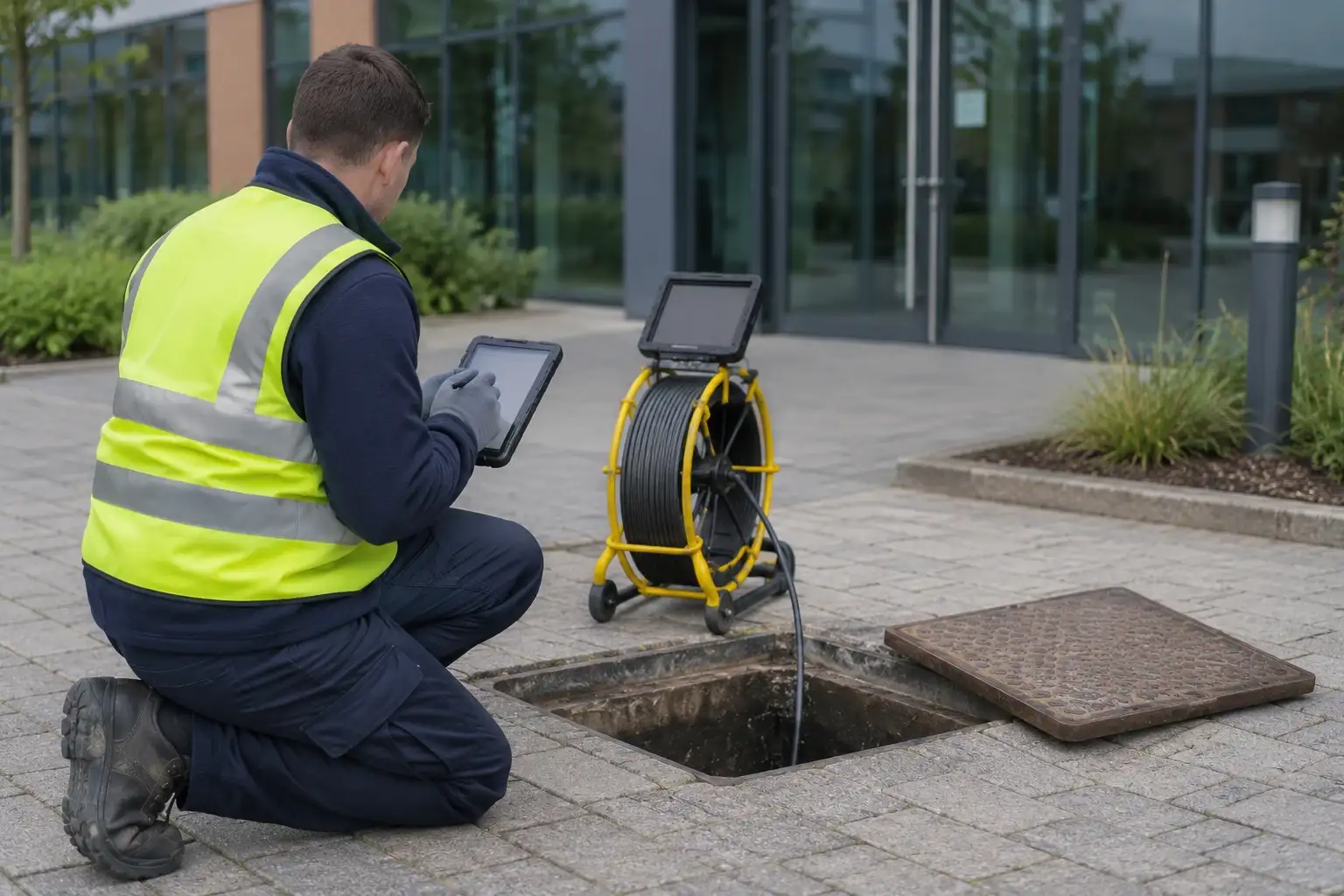
We lift covers, check gullies and catchpits, survey the surface water runs with CCTV and look at how soakaways and tanks are performing.
Findings and options
We explain what is failing and why, and quote for clearing, repair or replacement. Where a soakaway has reached the end of its life, we tell you.
Clear, repair or replace
We carry out the agreed work, from desilting and jetting through to excavating and rebuilding a failed soakaway.
Report and maintenance plan
You get footage, photos and a written report, with a suggested cleaning schedule so the system keeps working through the wetter months.
Sectors we work in
- Retail and shopping centres
- Hospitality and food service
- Offices and business parks
- Industrial and logistics
- Education
- Healthcare
- Managed residential blocks
- Car parks and forecourts

Free resource
The Drainage Compliance Checklist
A practical checklist for facilities and estates teams: what to inspect, what to record and what insurers and inspectors expect to see.
Soakaways and Surface Water: your questions
Why does our car park flood when it rains heavily?
Common causes are gullies and channel drains blocked with silt and leaves, catchpits that have filled up, soakaways that no longer drain fast enough, collapsed or root-damaged pipes, and blocked flow controls on storage tanks. Often it is a combination. A site investigation with CCTV shows where the system is failing, so you are paying to fix the actual cause rather than clearing gullies that will block again.
Can a soakaway be cleaned, or does it need replacing?
It depends on how it is built and why it has slowed down. Soakaways with an access chamber, or crate systems designed with inspection access, can sometimes be desilted and jetted. Older rubble-filled soakaways, or ones where the surrounding ground has clogged with fine silt, may not recover with cleaning and may need rebuilding or replacing. An inspection and a look at how quickly it drains will show which applies.
Where should surface water from our site go?
For rainwater drainage installed as building work in England, Requirement H3 of the Building Regulations sets an order of priority: an adequate soakaway or other infiltration system first, then a watercourse where that is not reasonably practicable, and then a sewer. Existing commercial sites often drain to a combination of these. Our survey maps where your surface water actually goes, which matters when planning repairs or changes to the site.
Can a new soakaway go anywhere on site?
No. Guidance in Approved Document H says infiltration devices should not be built within 5 metres of a building or road, in unstable ground, where the water table reaches the bottom of the device at any time of year, or where contaminated runoff could pollute groundwater. Larger soakaways are commonly designed using BRE Digest 365, which sizes the soakaway from an infiltration test carried out on site.
Do we need an oil separator on our surface water drainage?
Possibly. GOV.UK pollution prevention guidance says a separator may be needed on car parks larger than 800 square metres or with 50 or more spaces, and that the type and class depend on the activity and where the water discharges. Approved Document H guidance says separators discharging to infiltration devices or surface water sewers should be Class 1. If you are unsure whether your site has one, our investigation can check.
How often should surface water drainage be cleaned?
It depends on the site. A car park under trees or next to a busy road collects silt and leaves much faster than a roof draining to a clean soakaway. A common approach is to clear gullies and catchpits before autumn and check again after the leaves have fallen. We suggest a schedule based on what we find, and can include it in a planned maintenance contract.
Related guides
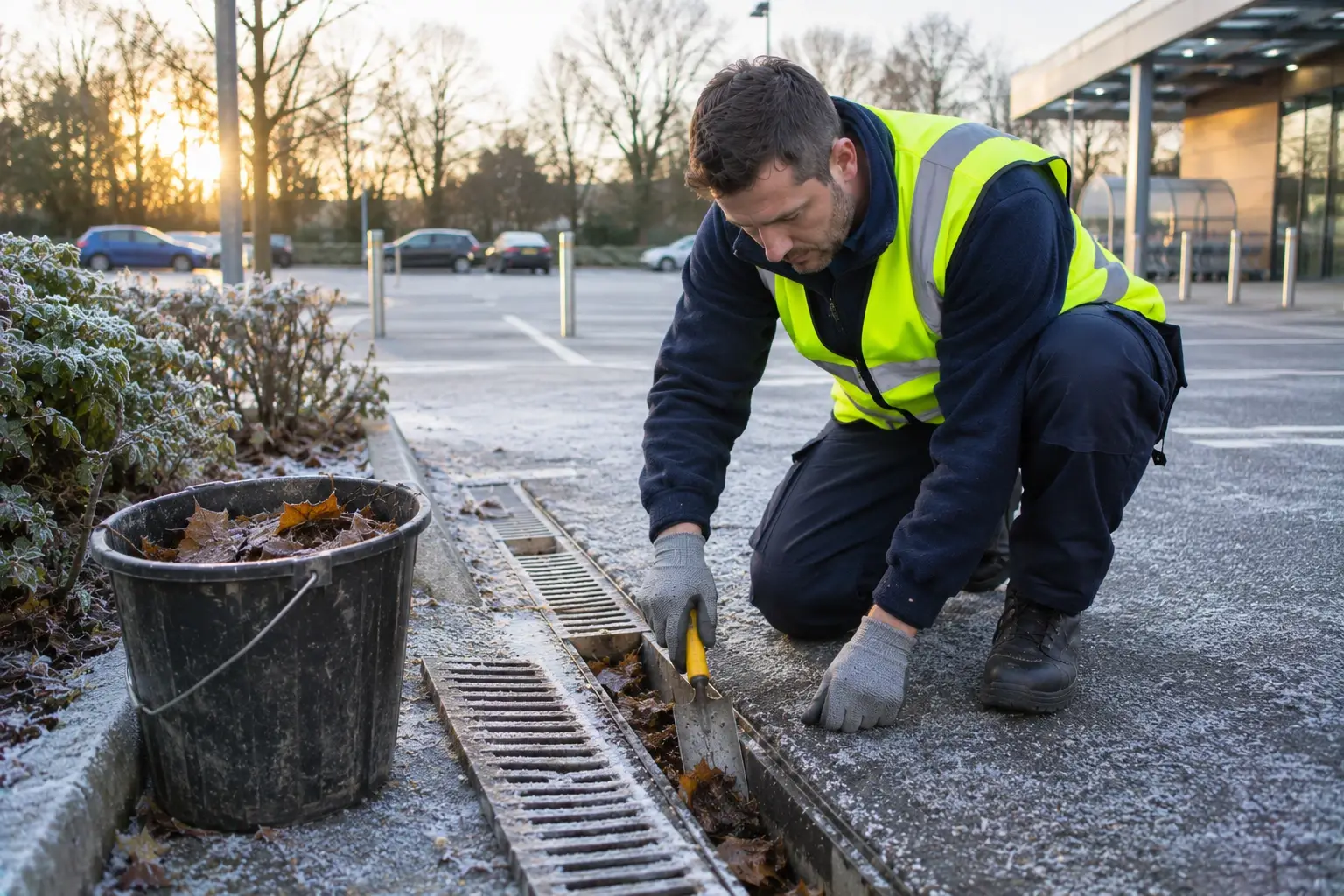
Preparing car park and surface water drainage for winter
How to prepare car park and surface water drainage for winter: gullies, channels, interceptors, soakaways and SuDS, with a September–November checklist.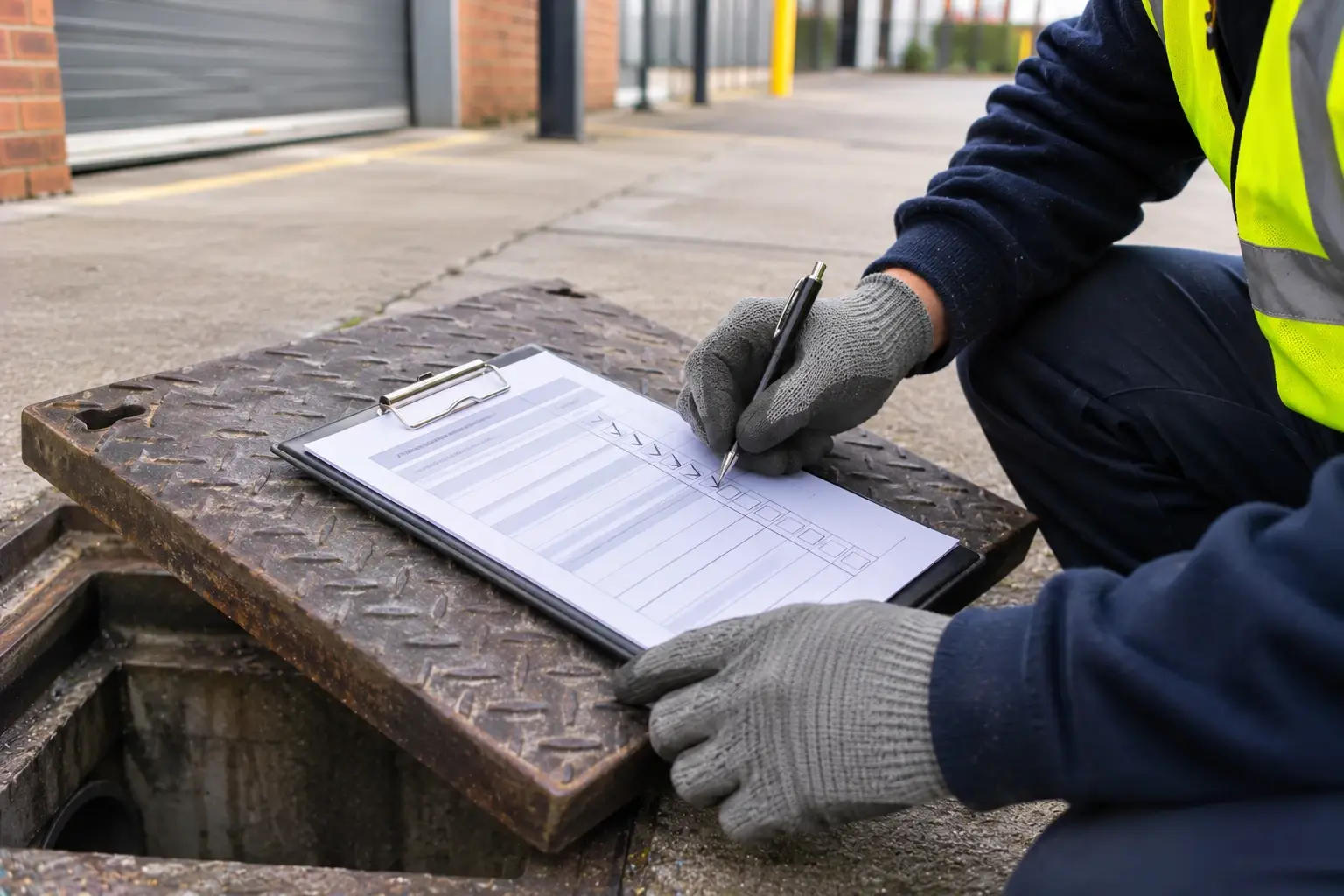
How often should commercial drains be serviced?
Drain servicing frequencies by sector and asset, from grease traps to oil separators, the guidance that sets minimums and how to build a schedule.
Areas we cover
From our base in Worthing we look after commercial sites across West Sussex, East Sussex, Surrey, Kent and Hampshire. Pick your town to see local drainage information.
Hampshire
Not sure if you're covered?
Give us the site postcode and we'll tell you straight away.
Drainage problem? Call now.
Flooding, backing up or a blocked kitchen line? Speak to the team about the next step.
Talk to us about soakaways and surface water. Get in touch now.
Tell us about the site and the problem. We will come back to you to talk it through, arrange a survey or get an engineer booked in.
- Commercial specialistsWe only work on commercial property, so we plan around trading hours, tenants and access.
- Clear reportingFindings, photos and recommendations in plain English, ready to share with your team or insurer.
- One BAES teamPart of BAES Building and Estate Services, so facilities, security and vacant property work can sit with the same team.