
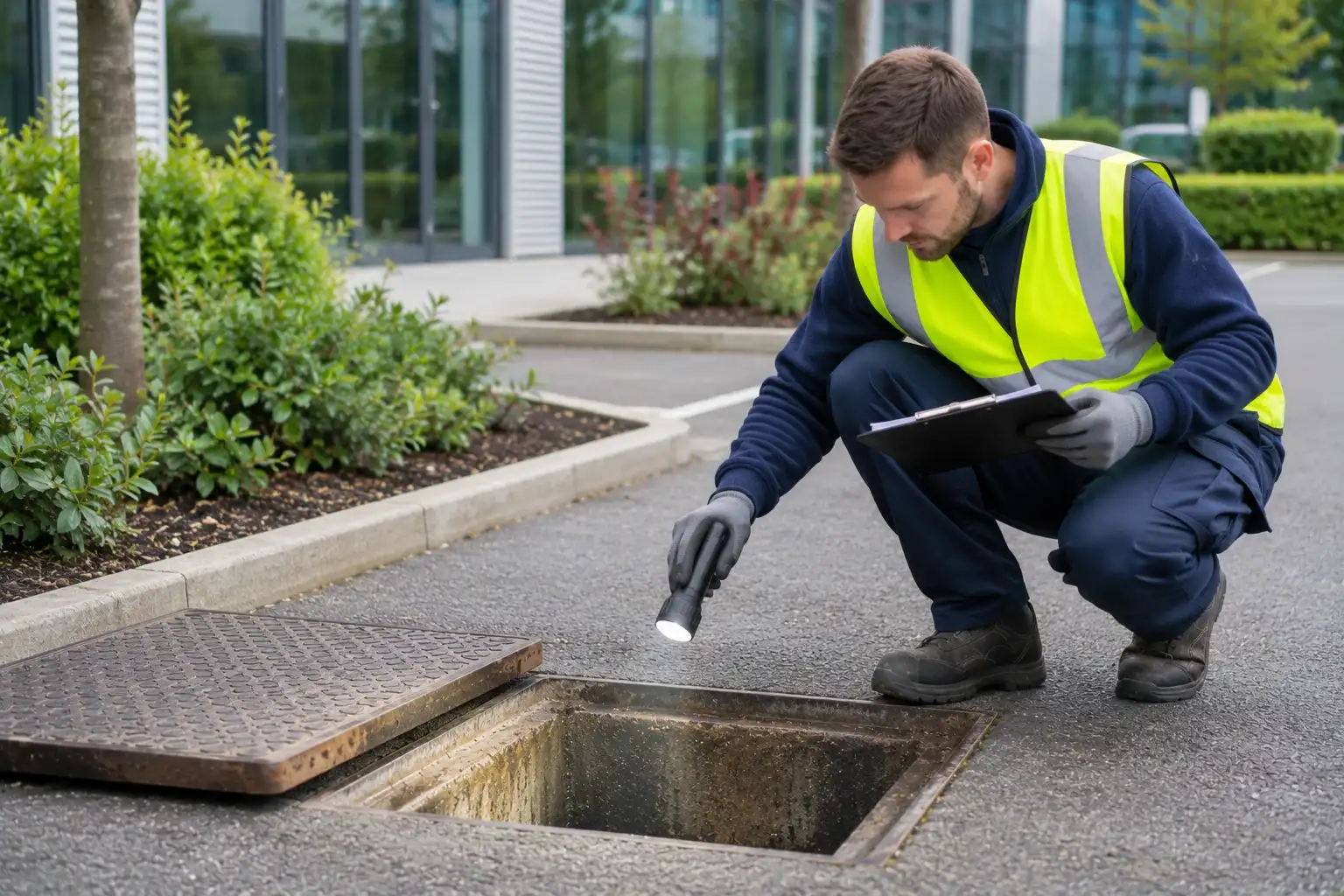
Commercial drainage services
Commercial drainage maintenance contracts
Scheduled jetting and inspection to help keep drains flowing across one site or a whole estate, with a dated record of every visit.
- Commercial property only, planned around your site
- Footage, photos and a written report where we survey
- Coverage throughout the South East
Request a site survey
Thanks, we've got your enquiry
A member of the BAES team will be in touch shortly. If it's urgent, call 01903 650120.
Planned Maintenance, explained
Planned preventative maintenance is a scheduled programme of drain jetting, CCTV inspection and chamber checks, agreed in advance and repeated at set intervals. BAES Drainage runs these contracts for facilities managers, managing agents and commercial landlords across West Sussex, East Sussex, Surrey, Kent and Hampshire from our base in Worthing, covering single buildings and multi-site estates.
Many commercial drainage problems build up gradually. Fat collects in a kitchen run, silt settles in a yard gully, roots find a joint. A planned programme aims to find and clear these before they become a flooded toilet block or a closed kitchen.
We agree a visit schedule based on how each site is used, then carry it out and report back after every visit. Over time you build an accurate picture of every run, chamber and gully you are responsible for, and a history that shows the work has been done.
For estates and portfolios, one contract covers every site, with a single point of contact and consistent reporting whichever building we are at.
The problems it solves
Unplanned shutdowns
A blocked drain in a restaurant kitchen, a staff welfare block or a loading bay can stop a business trading. Regular jetting removes the fat, scale and silt that commonly cause commercial blockages, so the problem is dealt with on a planned date rather than in the middle of service.
Showing you have met your duties
Drains that serve only your property and sit within its boundary are generally the owner's responsibility, and putting matter into a drain likely to interfere with the flow of a public sewer is an offence under the Water Industry Act 1991. Dated visit reports and an up-to-date asset register give you a record that the system is being looked after, which can help at lease end, at audit and if a dispute arises.
Questions from insurers
After an escape of water or flooding claim, an insurer may ask what maintenance was in place. A documented maintenance history, with photos or footage of key runs, lets you answer that question with records rather than recollection.
Repeat tenant complaints
Slow sinks, smells from gullies and recurring blockages lead to repeat complaints in multi-let buildings. Scheduling the problem runs for regular attention helps stop the same call coming in every few weeks and gives managing agents something concrete to tell occupiers.
How it works
Initial site visit
We walk the site with you or your contact, lift chambers, trace the main runs and talk through the history of blockages and complaints.
Schedule and scope
We propose a visit frequency for each site based on use, such as a food court needing more frequent attention than an office car park, and agree the scope in writing.
Baseline inspection
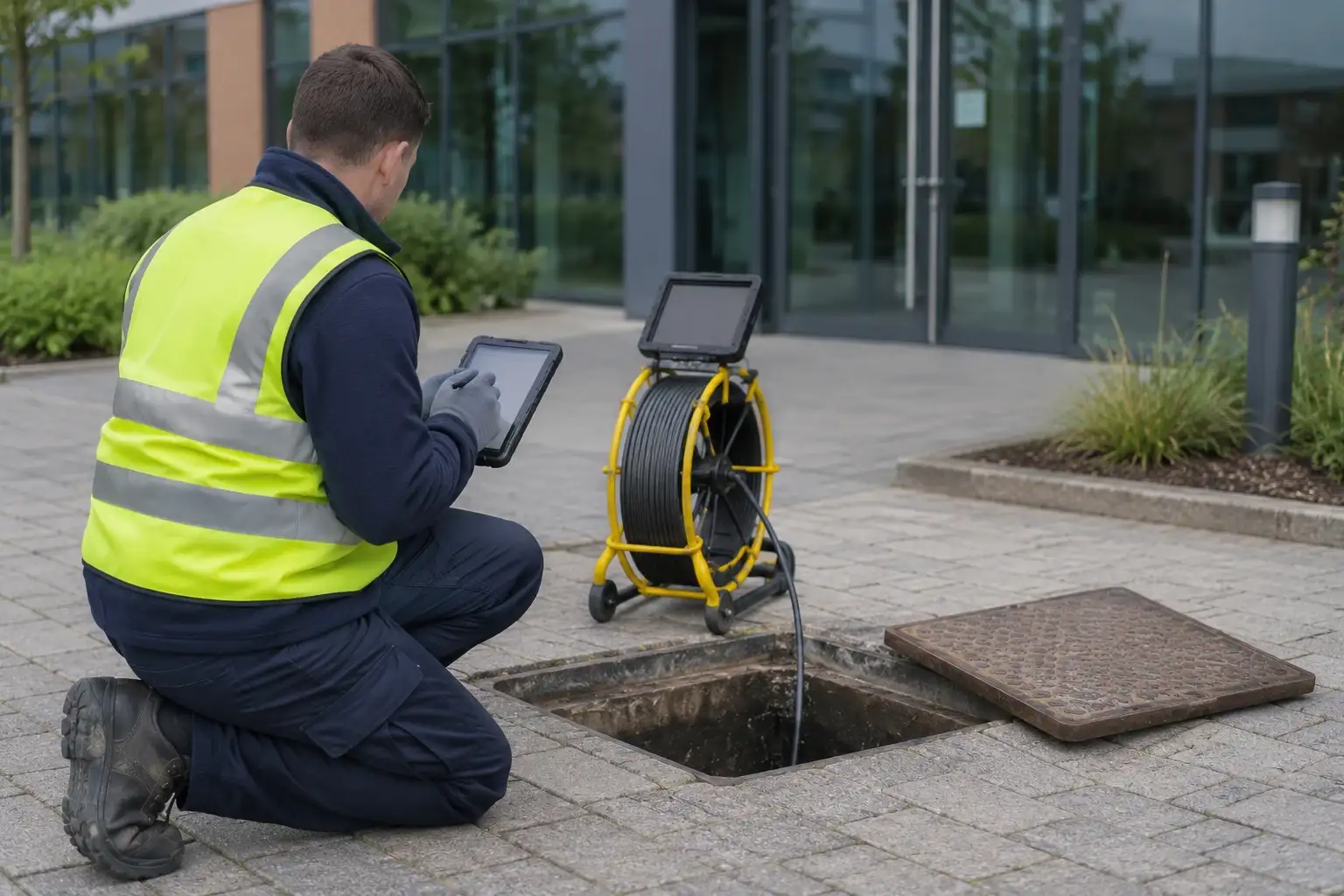
On the first visit we clean and inspect the key runs to record their condition and start the asset register.
Scheduled visits
Our engineers return on the agreed dates, jet and check the system, and note any defects that need repair.
Reports and review
You receive a report after each visit with photos and recommendations, and we review the schedule with you so frequency matches what we are finding.
Sectors we work in
- Retail and shopping centres
- Hospitality and food service
- Offices and business parks
- Industrial and logistics
- Education
- Healthcare
- Managed residential blocks
- Car parks and forecourts
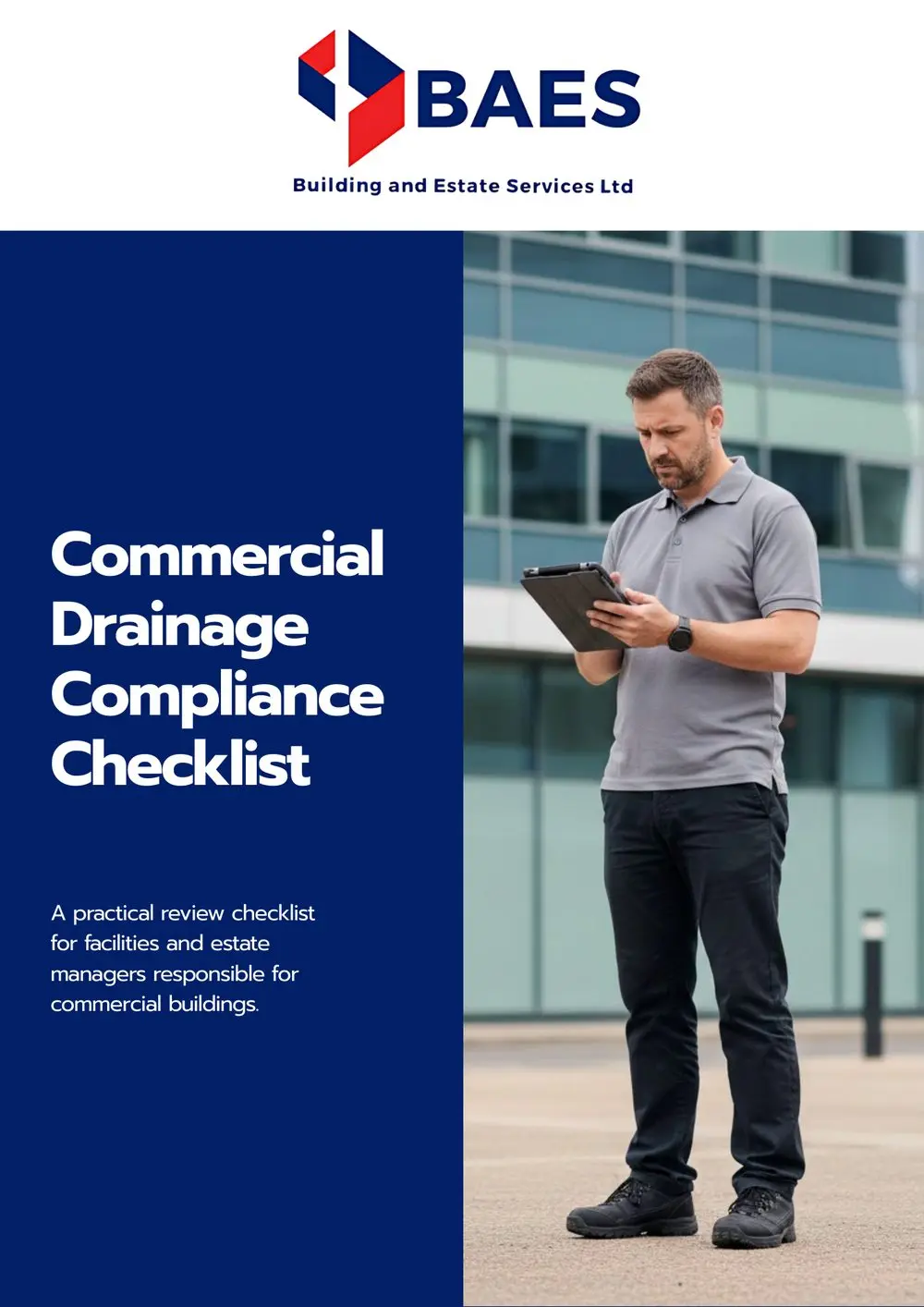
Free resource
The Drainage Compliance Checklist
A practical checklist for facilities and estates teams: what to inspect, what to record and what insurers and inspectors expect to see.
Planned Maintenance: your questions
How often should commercial drains be maintained?
It depends on how the site is used. Kitchens and food outlets tend to build up fat quickly and often need more frequent jetting than an office or a warehouse with mainly surface water drainage. Yards and car parks can collect silt and debris that varies with the season. We set the frequency for each site after the initial visit and adjust it as the visit reports show how quickly problems return.
Can one contract cover all our sites?
Yes. We cover towns across West Sussex, East Sussex, Surrey, Kent and Hampshire, and a single contract can include every site in that area. Each site has its own schedule and its own section in the asset register, but you deal with one point of contact and receive reports in the same format for every building, which makes it easier to compare sites and plan budgets.
What is a drainage asset register?
It is a record of the drainage on your site: the location of chambers, gullies and runs, what each run carries, pipe materials and sizes where known, and the condition found at each visit. Where a site has no reliable drainage drawings, the register may be the first accurate picture the owner has. It is updated as we work, so it stays current.
Who is responsible for the drains on a commercial site?
Generally, drains that serve only your property and sit within its boundary are the property owner's responsibility. Public sewers, lateral drains outside the boundary and, since October 2011, most drains shared with neighbouring properties are the water company's responsibility. A lease may pass that responsibility on to tenants or recover the cost through the service charge, so it is worth checking the lease. We can help identify where the boundary falls on site.
What happens if a visit finds a defect?
The engineer records it in the visit report with photos, and footage where a camera has been used, and explains what it means. If it needs repair, we quote separately so you can approve the work or put it into a capital plan. Nothing beyond the agreed maintenance scope is carried out without your approval.
Do contract clients get priority if something fails?
Yes. Sites on a planned maintenance contract get priority response when a drainage problem occurs between scheduled visits. Because we already know the site, its layout and its history from the asset register and previous reports, our engineers can often find the cause more quickly than a contractor seeing it for the first time, and the call-out is recorded in the same history.
Related guides

What a commercial drainage maintenance contract should cover
A checklist for commercial drainage PPM contracts: assets, visit frequencies, reporting, response times, pricing, waste paperwork, safety and red flags.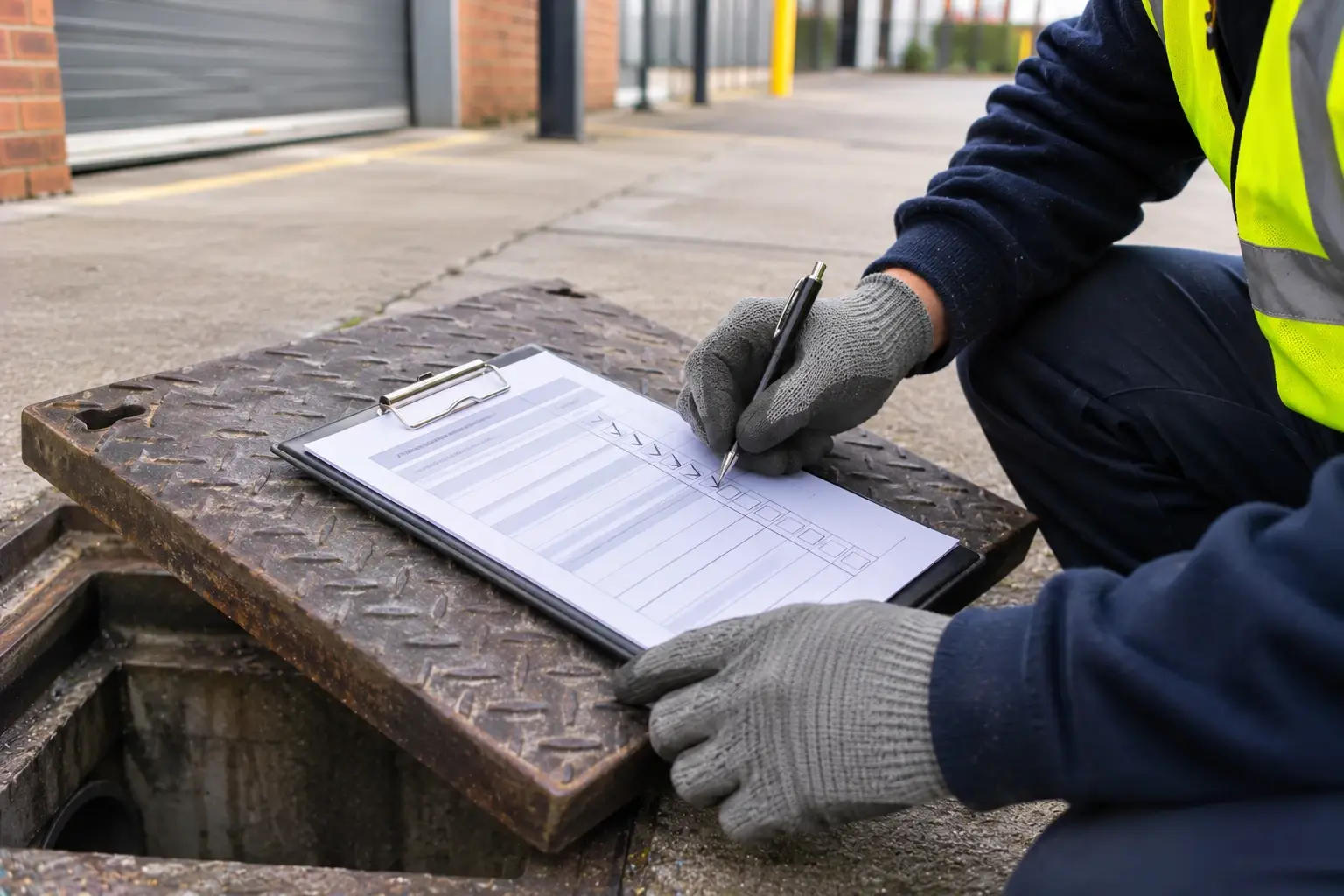
How often should commercial drains be serviced?
Drain servicing frequencies by sector and asset, from grease traps to oil separators, the guidance that sets minimums and how to build a schedule.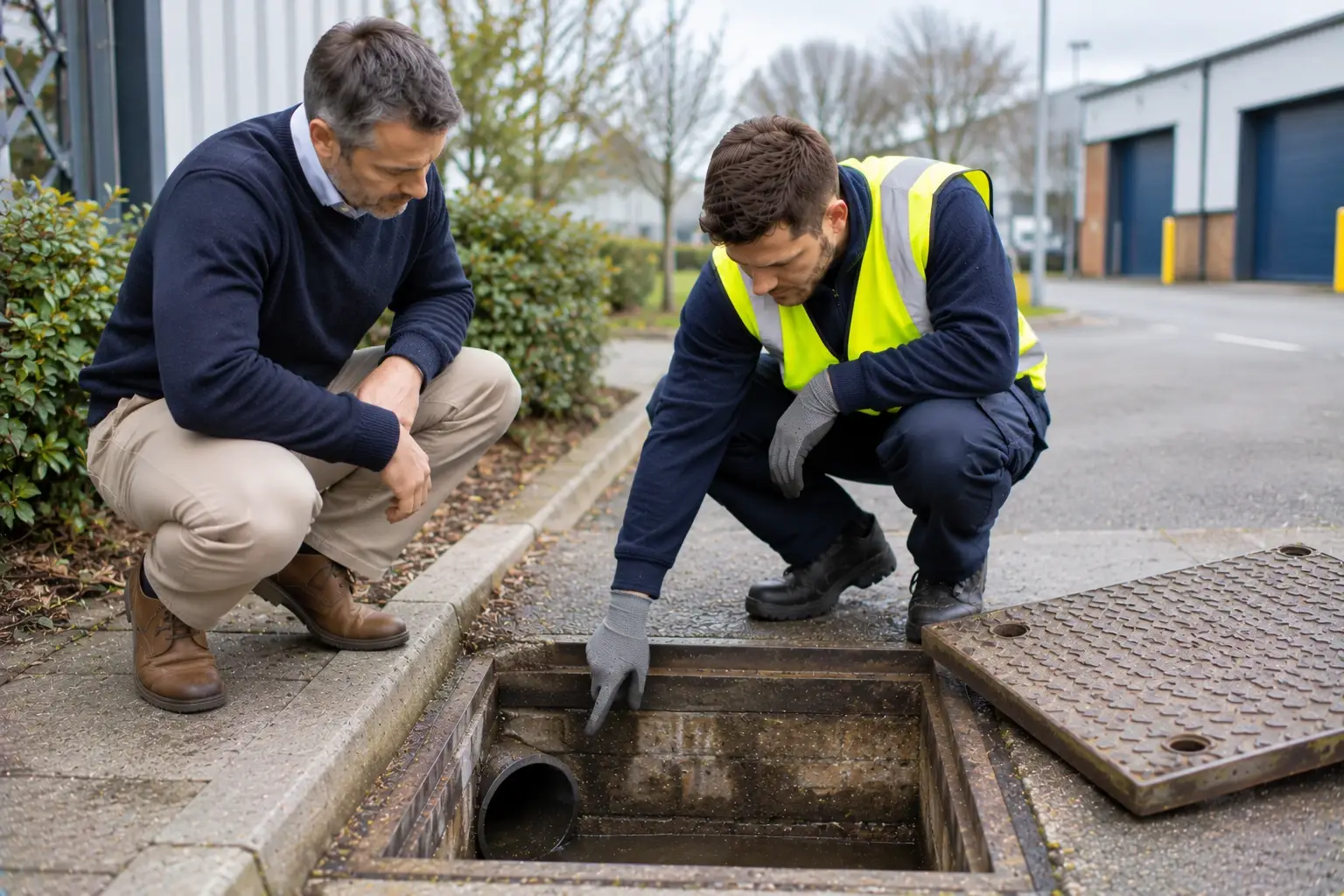
Who is responsible for drains on a commercial or multi-let site?
Who is responsible for drains on a commercial or multi-let site? Drains, lateral drains and sewers, the 2011 transfer, leases and service charges.
Areas we cover
From our base in Worthing we look after commercial sites across West Sussex, East Sussex, Surrey, Kent and Hampshire. Pick your town to see local drainage information.
Hampshire
Not sure if you're covered?
Give us the site postcode and we'll tell you straight away.
Drainage problem? Call now.
Flooding, backing up or a blocked kitchen line? Speak to the team about the next step.
Talk to us about planned maintenance (PPM). Get in touch now.
Tell us about the site and the problem. We will come back to you to talk it through, arrange a survey or get an engineer booked in.
- Commercial specialistsWe only work on commercial property, so we plan around trading hours, tenants and access.
- Clear reportingFindings, photos and recommendations in plain English, ready to share with your team or insurer.
- One BAES teamPart of BAES Building and Estate Services, so facilities, security and vacant property work can sit with the same team.